
How to Look Expensive on a Budget: 13 Proven Tips and Mistakes to Avoid for Women Over 40

Learning how to look expensive on a budget starts with a surprise: price tags rarely do the work. You can spend a lot and still look rushed, or spend little and look pulled together. If your closet feels full but your outfits don’t, a simple capsule wardrobe plan for women over 40 is a good place to begin.
Here’s the good news. Expensive-looking clothes share a few habits, and almost all of them are cheap to copy.
Take one idea about how to look expensive on a budget and try it this week. Skip the full makeover.
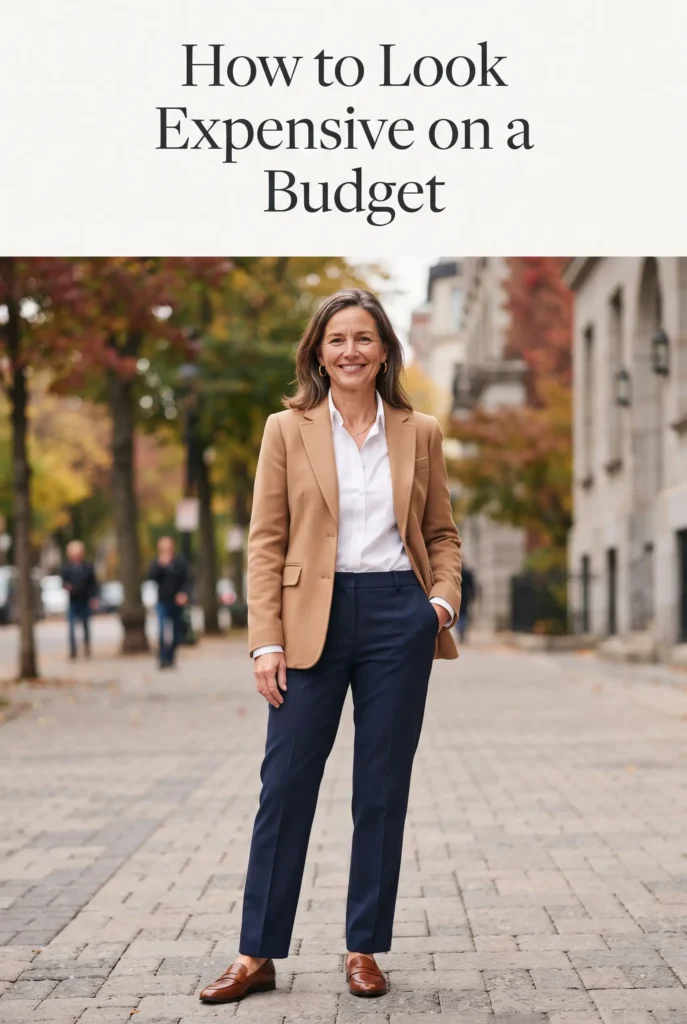
Below, how to look expensive on a budget gets practical: fit fixes, fabric checks, color rules, and the small mistakes that quietly cheapen an outfit.
What makes an expensive-looking outfit worth the effort?

How to look expensive on a budget comes down to fit, fabric, color, and care, and none of those need a famous label.
That’s good news. You can’t buy a different body, but you can buy a better hem. Most women who look polished repeat a few smart choices, and they repeat them often.
Anyone asking how to look expensive on a budget is really asking what money usually buys: neat edges, good drape, and calm color. You can build all of that slowly, and cheaply.
Look for these five things before you buy or style anything:
- Clothes that fit your shoulders and hips.
- Fabric with some weight and a matte finish.
- A tight palette of two base colors and one accent.
- Clean shoes and a structured bag.
- Surfaces that are pressed, lint-free, and free of pills.
Here’s a quick map of how to look expensive on a budget across the habits ahead.
| Habit | Best for | Detail worth borrowing |
|---|---|---|
| Tailoring | Trousers, jackets | Hem to the top of the shoe |
| Natural fabric | Knits, shirts | Dense weave, matte finish |
| Tight palette | Mixing outfits | Two base colors, one accent |
| Steaming | Coats, blouses | Press before you leave |
| Clean shoes | Every outfit | Polish scuffs weekly |
| Structured bag | Daily carry | Firm shape, no logos |
| Secondhand buying | Wool, silk, leather | Check seams and lining |
Why is tailoring the biggest part of how to look expensive on a budget?
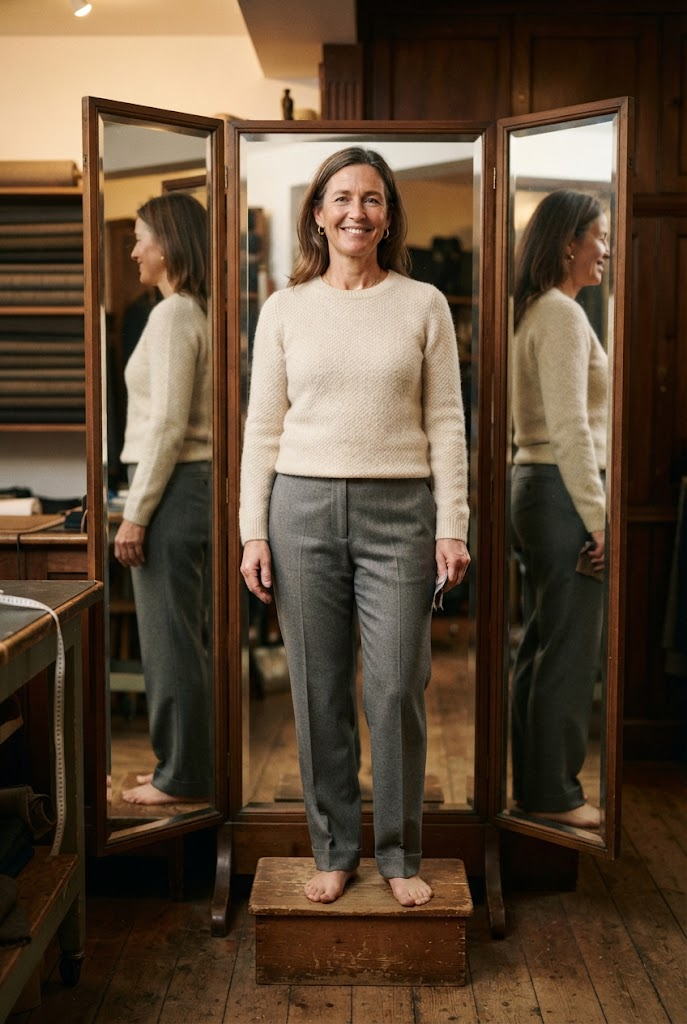
Tailoring comes first because a well-fitted inexpensive garment looks pricier than a loose designer one. Nothing else in how to look expensive on a budget pays off as fast.
Start with what you own. Pick three pieces that almost work, and ask a tailor what’s possible.
Hems are the easiest win. Trousers should skim the top of your shoe, with no pooling at the ankle. Waistbands can be taken in, and sleeves can be shortened at the cuff.
Shoulders are the line you can’t cross. If the seam sits past your shoulder bone, leave the jacket on the rack. Almost everything else can be adjusted.
Fit note: Sleeves end at the wrist bone. A jacket closes without pulling at the hip. A skirt lands at or just below the knee, and you can sit in it without tugging.
Ask for a price before you commit. A simple hem usually costs far less than the trousers did, and it changes how they look every single day. A capsule wardrobe plan for women over 40 will tell you which pieces deserve the fee.
Fit is the quietest way to look expensive without overspending.
Which fabrics look expensive even when they’re affordable?
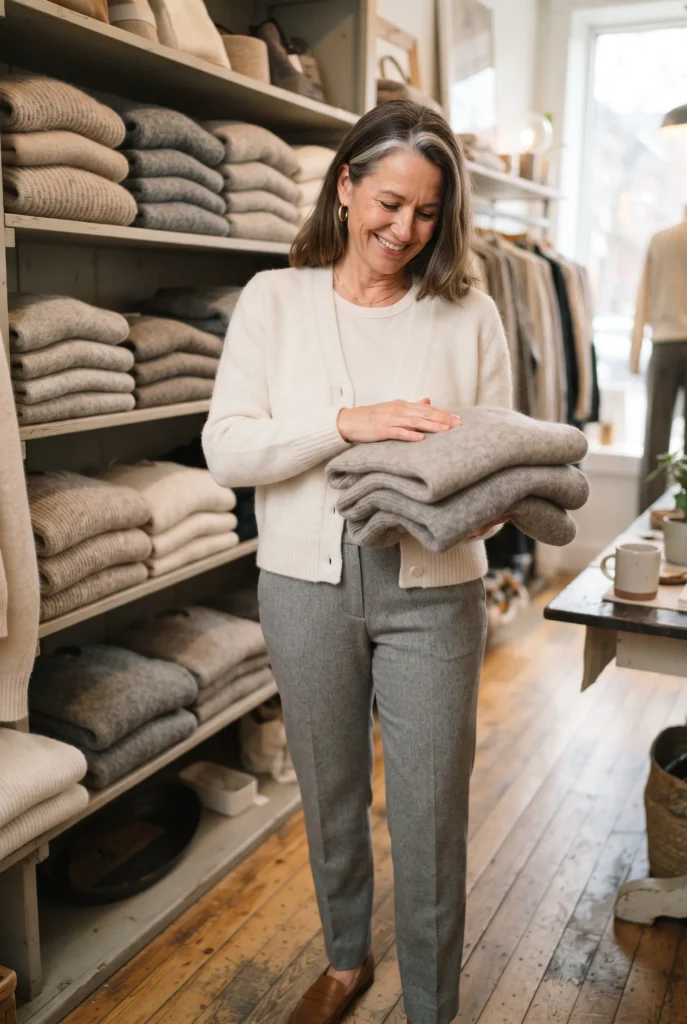
Wool, heavy cotton, silk, linen, and good knits look expensive because they drape well and hold their shape.
Fabric does a quiet share of the work in how to look expensive on a budget. So read the label before you read the price tag. Then touch the cloth. Does it spring back when you squeeze it? Hold it to the light, and if you can see through it, put it back.
| Fabric | What to check | Budget route |
|---|---|---|
| Wool blend | Tight weave, little pilling | Thrift stores, end-of-season sales |
| Cotton poplin | Thick enough not to show through | Basic shirts from everyday brands |
| Fine merino or cotton knit | Springs back after a squeeze | Outlets and resale |
| Silk or silk blend | Matte finish, not glossy | Secondhand shops |
| Linen blend | Lightly textured, not thin | Summer sales |
Skip anything shiny, clingy, or stiff with finish. Cheap polyester shows its shine under café lights and bags at the knees by the second wear. Browse the runway and street style pages at Vogue and ask yourself how often you see high shine on daytime clothes. Not often.
Blends are fine. A little stretch in trousers helps you sit and move, as long as the cloth still looks matte.
Buy for fabric first, and expensive-looking outfits on a budget happen more often than not.
How many colors does an expensive-looking outfit need?
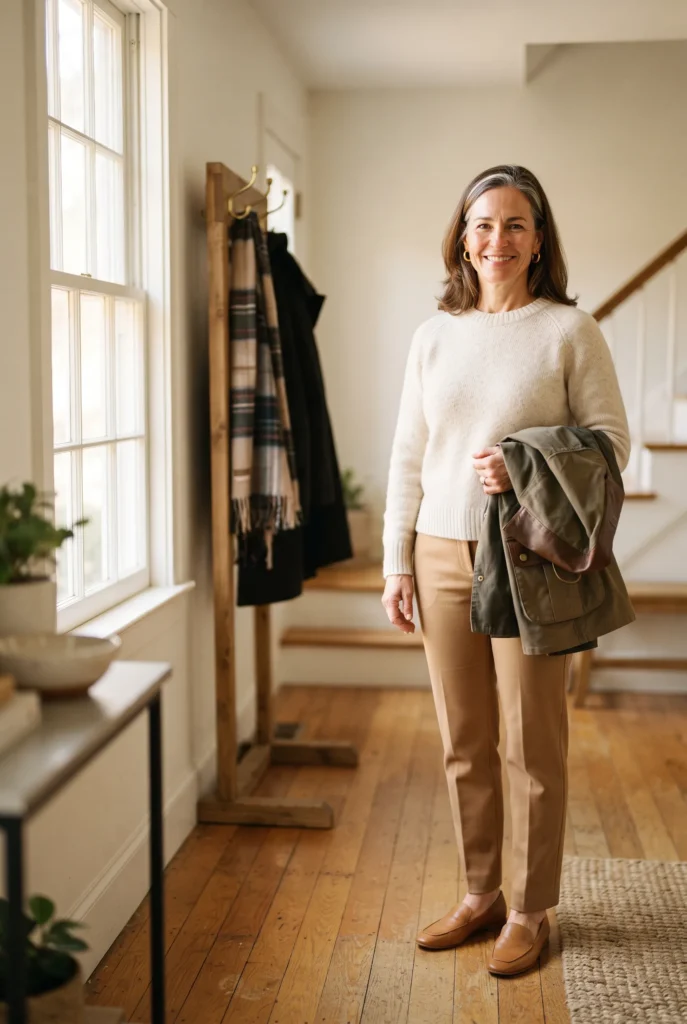
Two base colors and one accent are enough, because repeated colors read as planned.
A tight palette is the cheapest trick in how to look expensive on a budget. It makes ten pieces behave like thirty.
Pick your bases from navy, cream, camel, charcoal, and olive. Choose one accent, such as burgundy or forest green, and repeat it once in the outfit, maybe in a scarf or a belt.
- Navy and white: navy blazer, white shirt, gray trousers, burgundy flats.
- Camel and cream: cream knit, camel trousers, tan loafers, brown belt.
- Charcoal and olive: charcoal sweater, olive jacket, dark jeans, black boots.
- Stone and navy: stone chinos, navy tee, navy cardigan, white sneakers.
Trend forecasters like WGSN publish seasonal palettes, but you can ignore most of the loud ones. Quiet shades repeat well.
Check any color near your face in daylight. As gray comes in, soft white and deep navy often flatter more than stark black. A neutral color palette for women over 40 can help you test shades before you buy.
Keep it to two, add one accent, and you’ll look expensive for less.
Does pressing and caring for clothes really change how they look?
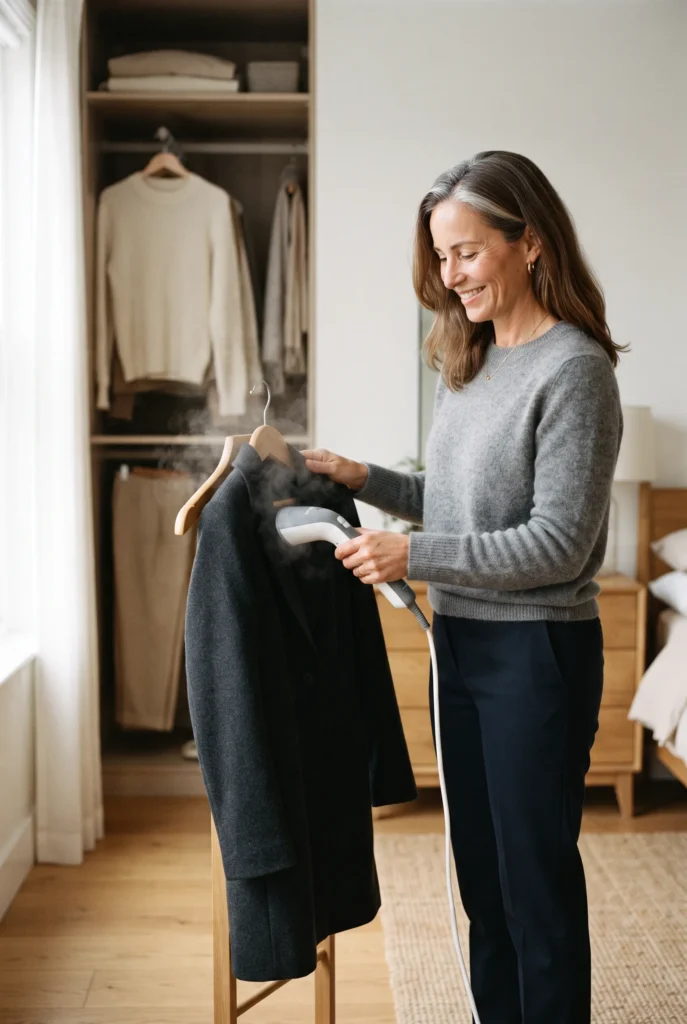
Yes. A pressed, lint-free, pill-free garment looks more expensive than a wrinkled one at twice the price.
Care is the unglamorous half of how to look expensive on a budget. Nobody posts about a lint roller. Everybody notices a creased collar.
Steam your clothes before you leave the house, ideally while you do your hair. Hang trousers from the hem, and fold knits flat so the shoulders don’t stretch. Shave pills off sweaters with a fabric shaver every few wears.
Comfort upgrade: A handheld steamer costs little and saves repeated dry-cleaning trips. It also relaxes wool trousers after a long day of sitting, so they look fresh again.
Wash less than you think. Air out wool between wears, spot-clean small marks, and wash knits cold and inside out. Wooden hangers keep jackets shaped, while wire ones leave dents in the shoulders.
Fix the small stuff the day you spot it: a loose thread, a missing button, a hem that came undone.
Keep the habits, keep the clothes, and you’ll have affordable polish that lasts.
What shoes make a budget outfit look polished?
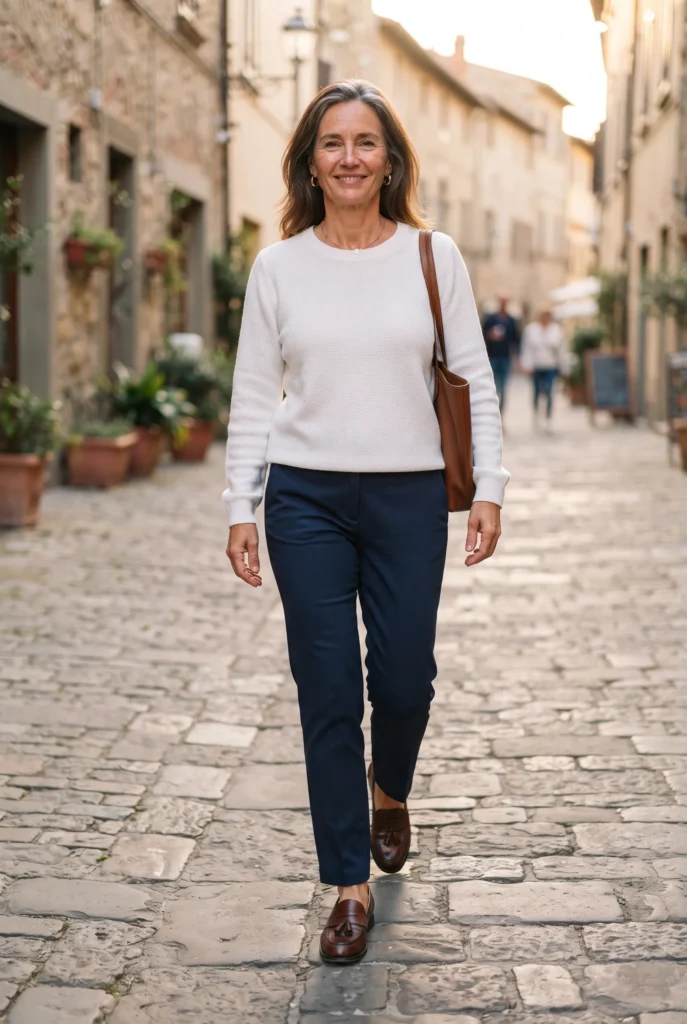
Clean leather loafers, simple flats, low block heels, and tidy boots make a budget outfit look polished.
If you only have one pot of money for how to look expensive on a budget, spend a bit more here. People notice shoes fast, and scuffed ones undo a good outfit.
Walk in them before you decide. A shoe you limp in ruins the whole look.
Color note: Match shoes to your bag or belt in tone, not in exact shade. Brown with tan works. Black with navy works. Orange with pink doesn’t.
Loafers go with trousers, jeans, and midi skirts. Ballet flats suit dresses and cropped pants. Ankle boots and tall boots work with coats and wide-leg trousers.
Keep heels under two inches. Skip chunky platforms, loud logos, and anything that squeaks on a hard floor.
Ask a cobbler for rubber half soles and new heel tips. It costs little and extends the life of good leather. Polish scuffs weekly, and see our picks for the best loafers for women over 40.
One clean pair does more than five tired ones, and it keeps you polished on a small budget.
Which bags look expensive without a designer price?
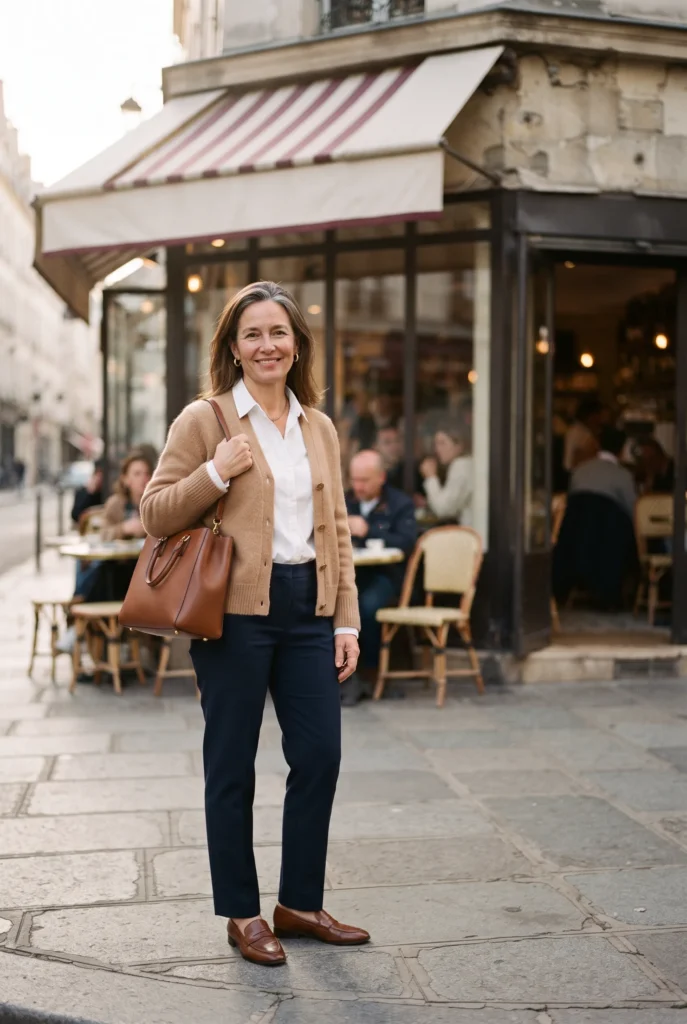
A structured tote or top-handle bag in black, brown, or tan looks expensive without a visible logo.
Bags are where many women overspend chasing a name, and that misses the point of how to look expensive on a budget. Shape and condition matter more than a label.
| Bag | Best for | What to check |
|---|---|---|
| Structured tote | Work, school pickup | Firm sides, sturdy handles |
| Top-handle bag | Dinner, errands | Clean stitching, plain hardware |
| Slim crossbody | Travel days | Narrow strap, no dangling charms |
| Canvas tote with leather handles | Weekends | Thick fabric, even seams |
Look at the zipper, the corners, and the handles. Those fail first. Flip through a brand look to see how quiet hardware looks on a bag that was designed well.
Keep it tidy inside. A bag stuffed past its shape sags and looks tired. A small pouch for chargers and receipts helps.
Wipe leather or faux leather after rain, and store the bag stuffed with tissue so it keeps its form.
One reliable bag beats five trendy ones, and it gives you a bag that looks costly.
How should you wear jewelry and scarves on a budget?
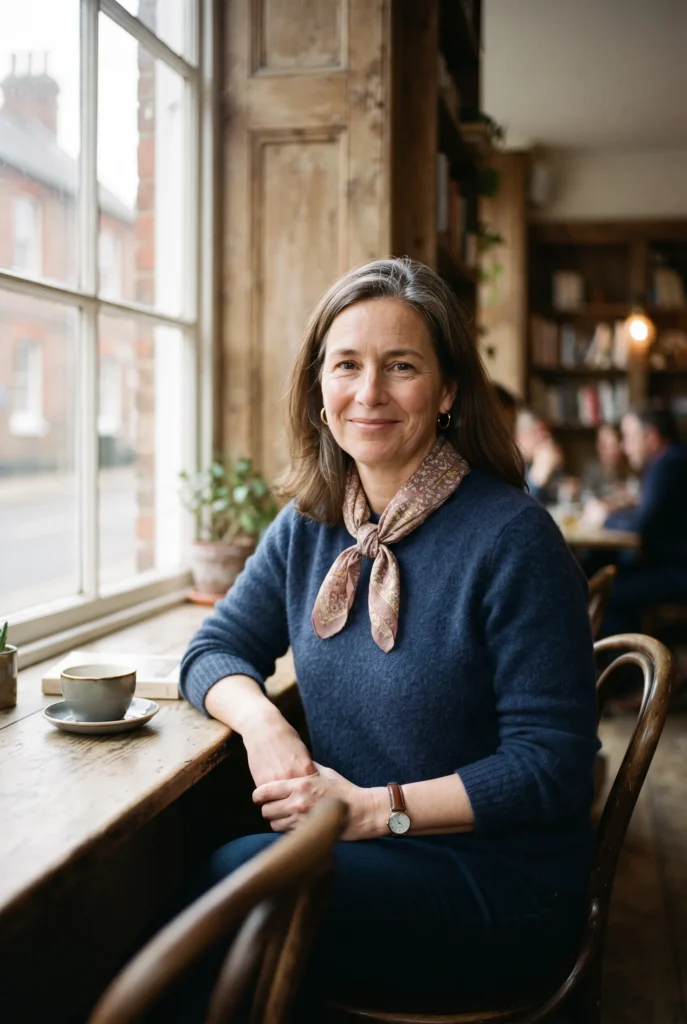
Wear one or two small pieces, such as studs, a simple watch, or a scarf, and skip stacks and loud statement pieces.
Jewelry helps with how to look expensive on a budget mostly by what it leaves out. A little goes far. Too much looks like a costume.
- Studs and a plain knit: pearl-look studs with a navy sweater.
- A thin chain: a fine gold-tone chain with a white shirt.
- A watch: a leather-strap watch with a gray crew neck and dark jeans.
- A scarf: a small-print scarf knotted at the neck over a camel coat.
Keep metals consistent. Warm gold goes with camel and cream. Silver goes with navy and gray. Mixed metals are fine when the pieces are small.
Check for flaking plating or green marks on your skin. Stainless steel and sterling silver hold up better than cheap alloy. A plain leather belt with a simple buckle is another quiet finishing piece.
If you wear one piece every day, choose one you love. People start to recognize you by it.
Small and simple is the easiest way to look pulled together for less.
Where can you shop secondhand for expensive-looking pieces?
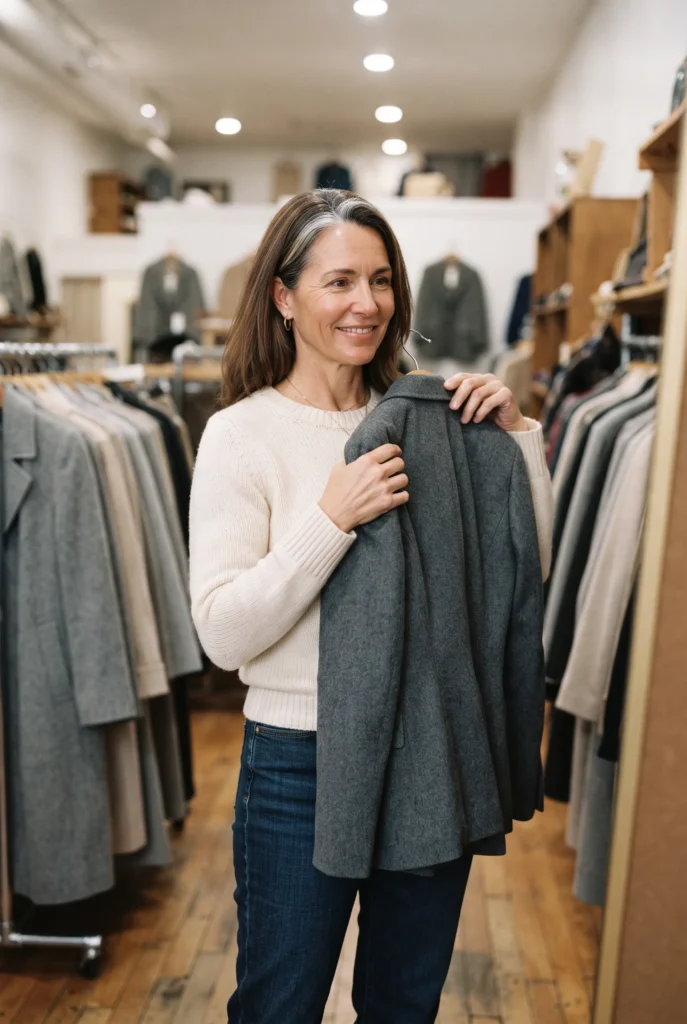
Thrift stores, consignment shops, and resale apps hold wool, silk, and leather pieces for far less than new prices.
For many women, secondhand shopping sits at the center of how to look expensive on a budget. Older garments often use denser fabric and better stitching than cheap new ones.
Go early in the week, and visit shops in neighborhoods where people buy good clothes. Scan the racks by fabric and color, not by size. Look for wool, silk, cashmere, and real leather first.
Fit note: Ignore the number on the tag and trust the mirror. Tug gently at the seams, check the lining, and look under the arms for stains or yellowing. Smell the collar and cuffs.
Think about alterations before you pay. A jacket with perfect shoulders and long sleeves is a bargain. A jacket with narrow shoulders isn’t, whatever the price.
Skip anything with a persistent odor, holes, or heavy pilling. Wash or dry-clean new finds before you wear them.
Buy fewer pieces, buy better ones, and you’ll end up with secondhand finds that look new.
Is a smaller wardrobe cheaper than a big one?

A small, coordinated wardrobe is cheaper because each piece gets worn often, so the cost per wear drops fast.
A smaller closet is the most dependable route to how to look expensive on a budget, since fewer pieces usually means better ones. It also takes the guesswork out of mornings.
| Piece | How often you’d wear it | Why it earns its place |
|---|---|---|
| Navy blazer | Weekly | Sharpens jeans and dresses |
| Straight trousers | Several times a week | Pairs with knits and shirts |
| White cotton shirt | Weekly | Layers under everything |
| Fine knit | Weekly in cool months | Works with every bottom |
| Dark straight jeans | Weekly | Anchors casual looks |
Do a quick audit. Pull out everything you wore in the last month. What do those pieces share? Probably a color, a shape, and a fabric. Build from there.
Before buying anything new, ask whether it works with three things you already own. If not, wait. A capsule wardrobe plan for women over 40 can help you map the gaps.
Wait for sales on basics, but never buy a size down for a discount.
Own less, wear it well, and budget style looks planned.
What does an expensive-looking work outfit look like?

A fitted blazer, a crisp shirt, straight trousers, and polished shoes in two colors read as expensive in almost any office.
That’s the heart of how to look expensive on a budget at work: repeat simple pieces and keep the details sharp. For ideas, browse the style pages at Harper’s Bazaar and notice how plain the shapes are.
- Meeting day: navy blazer, white shirt, gray trousers, black loafers.
- Presentation: camel knit, charcoal straight skirt, black flats.
- Casual Friday: striped tee, dark jeans, olive jacket, brown loafers.
- Remote day: fine knit, soft trousers, small studs.
Wear the same pieces twice in a week. Nobody counts. Swap the shirt or the scarf, and the outfit looks new.
Keep a lint roller in your desk and a spare pair of tights in your bag. Wrinkled collars and visible bra straps cheapen even an excellent blazer, so check the mirror from the back, too.
A simple office uniform is a quick way to look expensive without a fortune.
How do you keep weekend outfits looking expensive?
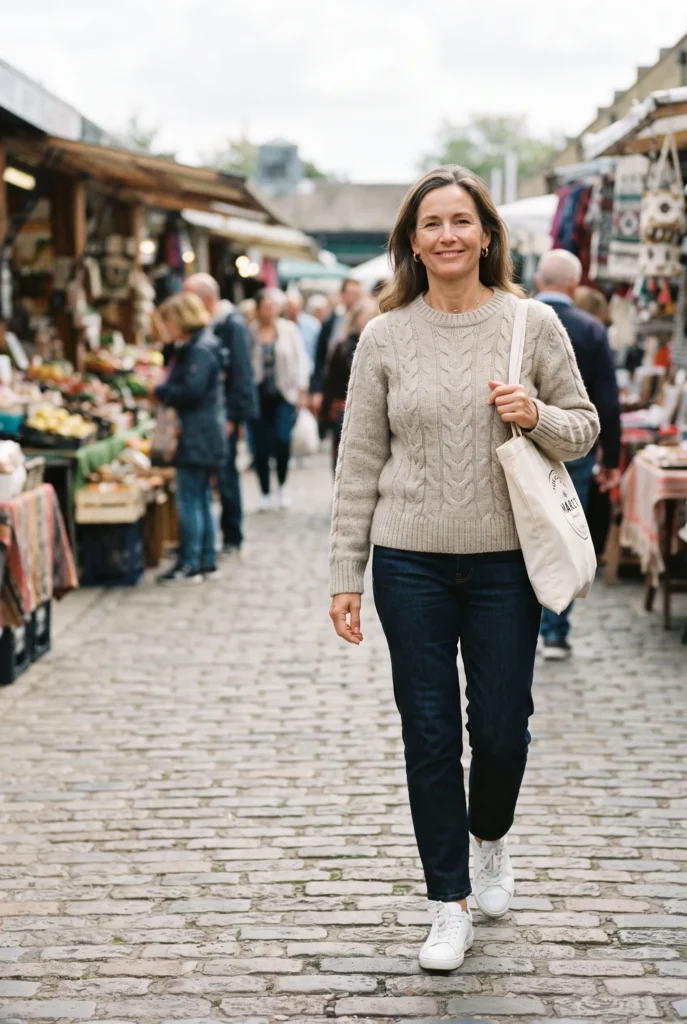
Dark straight jeans, a fine knit, and clean sneakers or loafers keep weekends as polished as workdays.
Weekends test how to look expensive on a budget, because comfort tempts us to drop the standards we keep Monday to Friday. You don’t have to. Same fabrics, looser shapes.
Try a school pickup outfit: an oatmeal sweater, dark jeans, and white leather sneakers. Or a walk in the park: a quilted jacket, a navy tee, khaki trousers, and boots. Lunch with friends could be a striped boat-neck tee, white jeans, and tan loafers.
Comfort upgrade: Choose jeans in a thicker denim with a little stretch, so they hold their shape by evening. Add cushioned insoles to sneakers for long days on your feet.
If you love leggings, pick a thick, matte pair and wear a long cardigan or a fitted jacket over them. No logos, no faded black.
Plain sweatshirts look neat when the fit is right and the color is soft. Gray, cream, and navy all work.
Dress down the shoes, not the fabric, and your weekend style stays sharp.
Can you look expensive at dinner without a new dress?
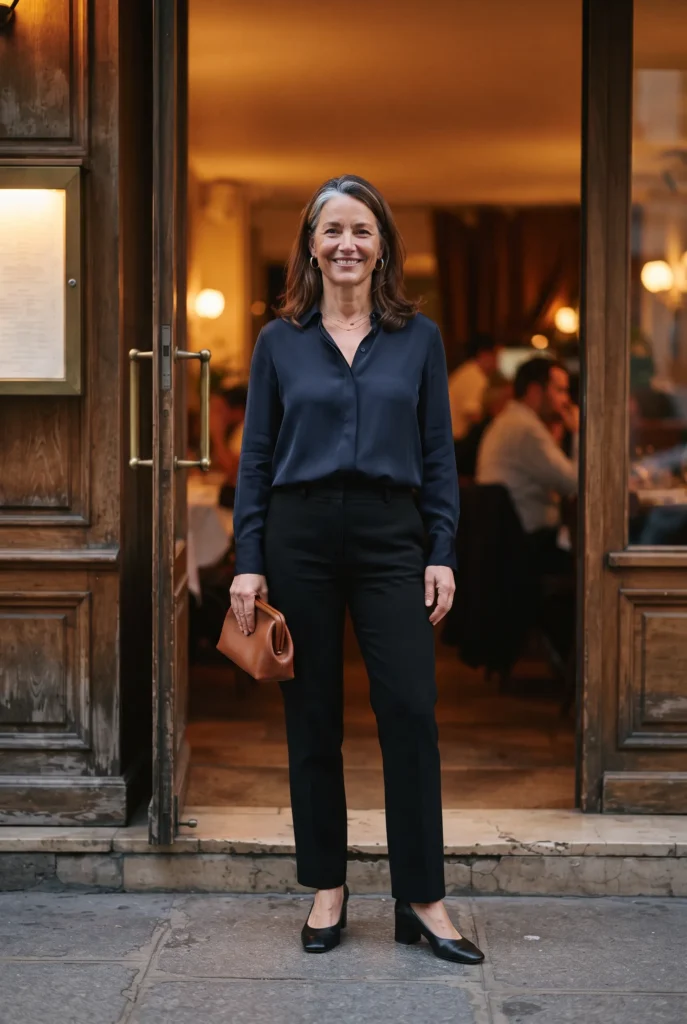
Yes, a matte blouse, dark trousers, low heels, and small earrings look expensive at dinner without a new dress.
Dinner is the easiest place to practice how to look expensive on a budget, since dark colors and a good hem do most of the work.
| Occasion | Base pieces | Why it works |
|---|---|---|
| Restaurant dinner | Matte blouse, black trousers, block heels | Polished, easy to sit in |
| Family gathering | Knit dress, tights, ankle boots | Warm and neat |
| Wedding guest | Midi dress, light wrap, pumps | Formal without glitter |
| Theater night | Velvet blazer, silk-look top, trousers | Texture instead of sparkle |
Evening doesn’t need sequins. Texture is enough. Borrow a dress from a friend, rent one, or check resale racks for a plain wool crepe midi.
Think about sitting. You’ll be in that chair for two hours, so skip a waistband that digs and a hem that rides up.
Add small earrings and a slim clutch. Leave anything that glitters from across the room at home.
Quiet at night still reads as evening polish.
Which mistakes ruin how to look expensive on a budget?

Tight fit, shiny fabric, visible logos, scuffed shoes, and too many accessories cheapen almost any outfit.
- Buying a size too small because it was on sale.
- Wearing logos from head to toe.
- Letting shoes and bags look worn.
- Stacking too many accessories at once.
- Skipping the steamer and keeping pilled knits.
None of these cost much to fix. A fabric shaver, a shoe brush, and a tailor appointment go a long way.
Color note: Pure black near the face can look harsh once gray hair comes in. Try navy, charcoal, or soft white for tops.
Trends are the quiet trap. If something is everywhere this month, skip it. The pieces you’d still wear in three years are the ones to buy.
Over-matching is another easy slip. A perfect set in one color from collar to shoe looks stiff, so vary the shade a little and let texture do the contrasting.
Shopping when you’re tired or bored is the last one. Make a list, stick to it, and sleep on any purchase that makes you hesitate. Fix one mistake a week and you’ll look expensive on a budget without another shopping trip.
Copy the principle, not the price tag
When a photo catches your eye, don’t buy the whole look. Ask four questions first, because they keep how to look expensive on a budget from turning into a shopping spree.
- What fabric is that, and do I own something close?
- Which two colors are doing the work?
- Where do the hem and sleeves end?
- Would I wear it on an ordinary Tuesday?
| Instead of copying this | Borrow this principle |
|---|---|
| A designer coat | A long, straight, well-fitted wool coat |
| A logo bag | A structured bag with clean lines |
| A full matching set | A two-color palette across pieces |
| Layers of statement jewelry | One small, quiet piece |
Borrowing a principle is how to look expensive on a budget for years, not just for one outfit.
If you’re unsure where to start, our capsule wardrobe plan for women over 40 sorts the essentials from the extras, and it keeps how to look expensive on a budget from cluttering your closet.
Build your own daily formula from expensive-looking outfits you like
Use one simple structure and swap the parts. That’s how to look expensive on a budget every morning, with no new purchase required.
Formula: fitted layer + straight bottom + clean shoe + one quiet accent.
- Fitted layer: navy blazer, cream knit, white shirt, oatmeal cardigan.
- Straight bottom: charcoal trousers, stone chinos, dark jeans, knee-length skirt.
- Clean shoe: brown loafers, black flats, tan boots, white leather sneakers.
- Quiet accent: silk-look scarf, small studs, leather watch, brown belt.
Swap tip: Change one part, not four. Trade loafers for boots, and the same outfit works in November.
Write your three best combinations in a note on your phone. Wear them for two weeks, then keep the ones that feel like you. That’s how to look expensive on a budget in the long run.
Wear it on a Tuesday, not just for an occasion. That’s when how to look expensive on a budget actually counts.
Frequently Asked Questions
How to look expensive on a budget if you hate shopping?
The easiest way to approach how to look expensive on a budget is to shop less. Buy a few well-fitted basics in navy and cream, then pay for tailoring. A simple palette lets every piece work together, so you spend less time browsing and more time wearing what you own.
What colors look most expensive on women over 40?
Navy, cream, camel, olive, charcoal, and soft white look most expensive on women over 40 because they blend without competing. Repeat two of them in each outfit and add one accent. Hold each shade near your face in daylight to check it flatters your skin and hair.
Does thrifting really help you look expensive?
Thrifting is a core part of how to look expensive on a budget because older garments often use denser wool, silk, and leather. Check seams, linings, and underarms before buying, and plan on a small tailoring fee. Skip anything with stains or odors you can’t remove.
Which single piece makes the biggest difference?
A well-fitted blazer makes the biggest difference because it sharpens jeans and dresses alike. Look for a wool blend, shoulders that sit square, and sleeves that end at the wrist bone. That one piece shows how to look expensive on a budget better than any accessory.
Can leggings and sneakers look expensive?
Leggings and sneakers can look expensive when the fabric is thick, the sneakers are clean, and the top is long and structured. Add a fitted jacket or long cardigan in a neutral color. Skip visible logos and faded black, which signals wear instead of polish.
How many clothes do I need for a polished wardrobe?
A polished everyday wardrobe needs far fewer pieces than most closets hold. Start with a blazer, straight trousers, dark jeans, two knits, a white shirt, and two pairs of shoes, then add as you find gaps. Fit and color matter more than count.


