
How To Replace A Watch Strap

How to replace a watch strap at home is simpler than most people expect, once you know what the small metal bars at each end of the strap actually do. Those spring bars sit in tiny holes inside the watch lugs, and a simple fork-shaped tool compresses them just enough to free the old strap and seat the new one. Work slowly, on a soft surface, and you can give a familiar watch a completely different feel in about ten minutes.
The eight steps below cover tools, sizing, removal, cleaning, fitting, testing, comfort, and care, so you are not guessing at any point. Learning how to replace a watch strap is also useful when you are refreshing a first luxury watch with a new color, because the same careful method applies to most everyday watches. Pick a quiet moment, lay everything out first, and keep the small parts where you can see them.
Gather the Right Tools
Credit: shoesmegastore.com
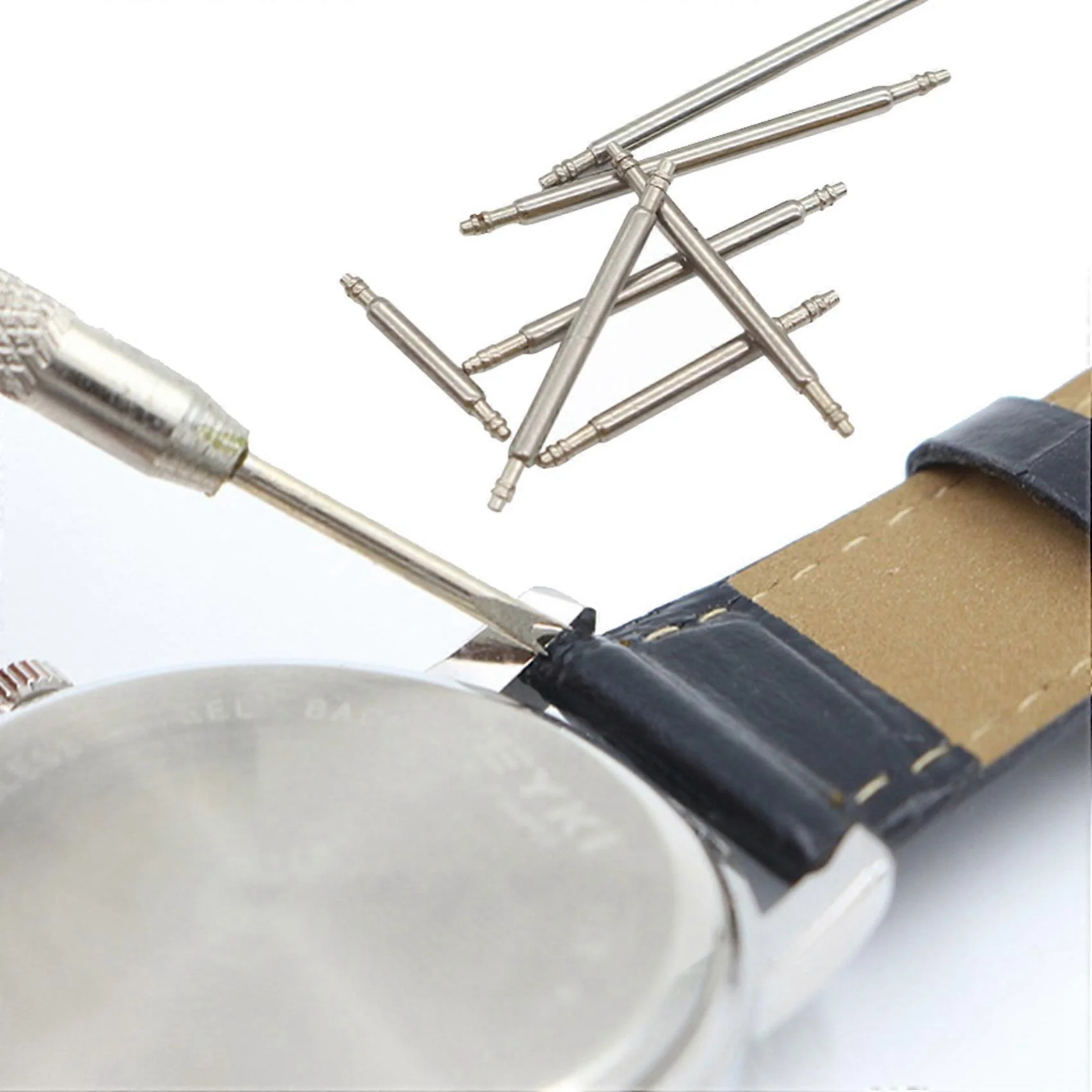
You do not need a watchmaker’s bench when you learn how to replace a watch strap, but you do need the right small tools, because a knife or pin can slip and scratch the case. A dedicated spring bar tool has a fork end for leather and rubber straps and often a pin end for bracelets, and it costs far less than a single professional strap change. Add a soft microfiber cloth, a small tray for spring bars, and good light.
- Lay the watch face down on the cloth so the crystal is protected.
- Check that the fork fits the gap between strap and lug.
- Keep spare spring bars in the correct diameter, usually 1.5 mm or 1.8 mm.
- Put a small bowl or tray beside you for any part that pops free.
When you learn how to replace a watch strap, starting prepared makes the whole job calmer, so do not begin until the new strap, the tool, and the spares are all in reach.
Identify Your Lug Width and Spring Bars
Credit: delugs.com
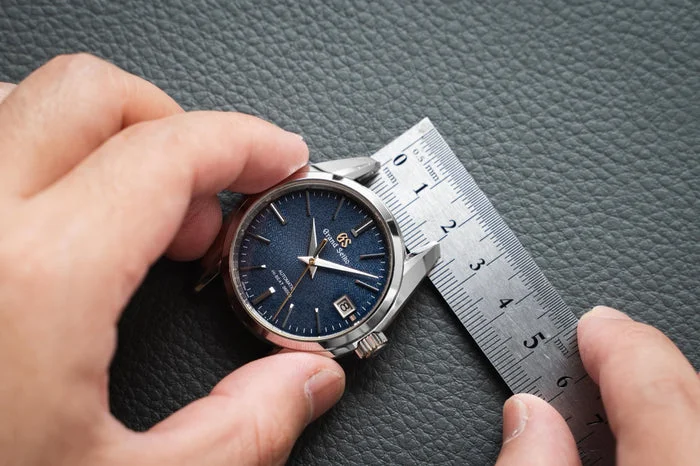
When you learn how to replace a watch strap, start with lug width: the inside distance between the two lugs at one end of the case, in millimeters, which decides which strap width fits without squeezing or leaving a gap. Common sizes are 18 mm, 20 mm, and 22 mm, but 19 mm and 21 mm also exist, so never guess from the case diameter alone. Check the old strap, manual, or maker specifications.
- Measure inside lug to inside lug, not across the outside of the case.
- Match the strap width at the watch end to that exact number.
- Check the spring bar length too: it should match the lug width.
- Note whether your strap uses standard bars or quick-release bars with a lever.
Knowing how to replace a watch strap in your exact size makes ordering simple and returns rare. Buy the stated width unless the maker lists a different fit, and keep the old strap until the new one is tested.
Remove the Old Strap
Credit: luxury-time-piece.com
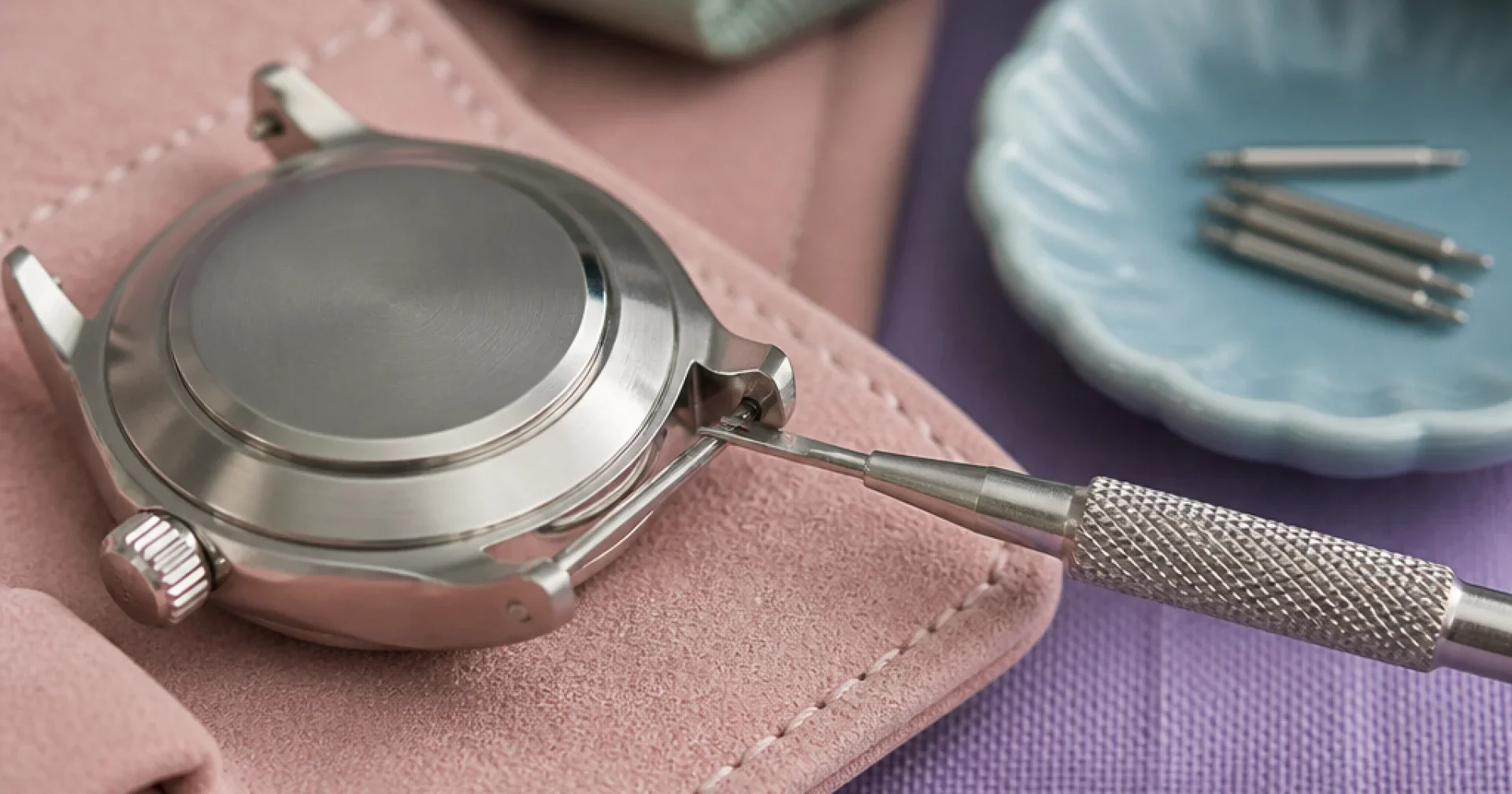
Removing the old strap is where most people rush when learning how to replace a watch strap, and it is also where scratches happen. Place the watch face down, slide the fork into the gap between strap and lug, and press the bar gently inward, toward the strap center. The bar should release from its lug hole, letting you lift that side of the strap away. See the spring bar tool guide.
Quick Tip: Work over the cloth or tray, not over a sink or carpet, because a bar can ping away. Press inward first, then lift outward; do not lever against the case or pull hard while the bar is seated.
Once one side is free, repeat the motion on the other side, then do the same at the other end of the case. When learning how to replace a watch strap, allow a few extra minutes here, keep your hands steady, and save undamaged old bars, because the new strap may not include its own.
Clean the Lugs and Case
Credit: timeinmyhands.com
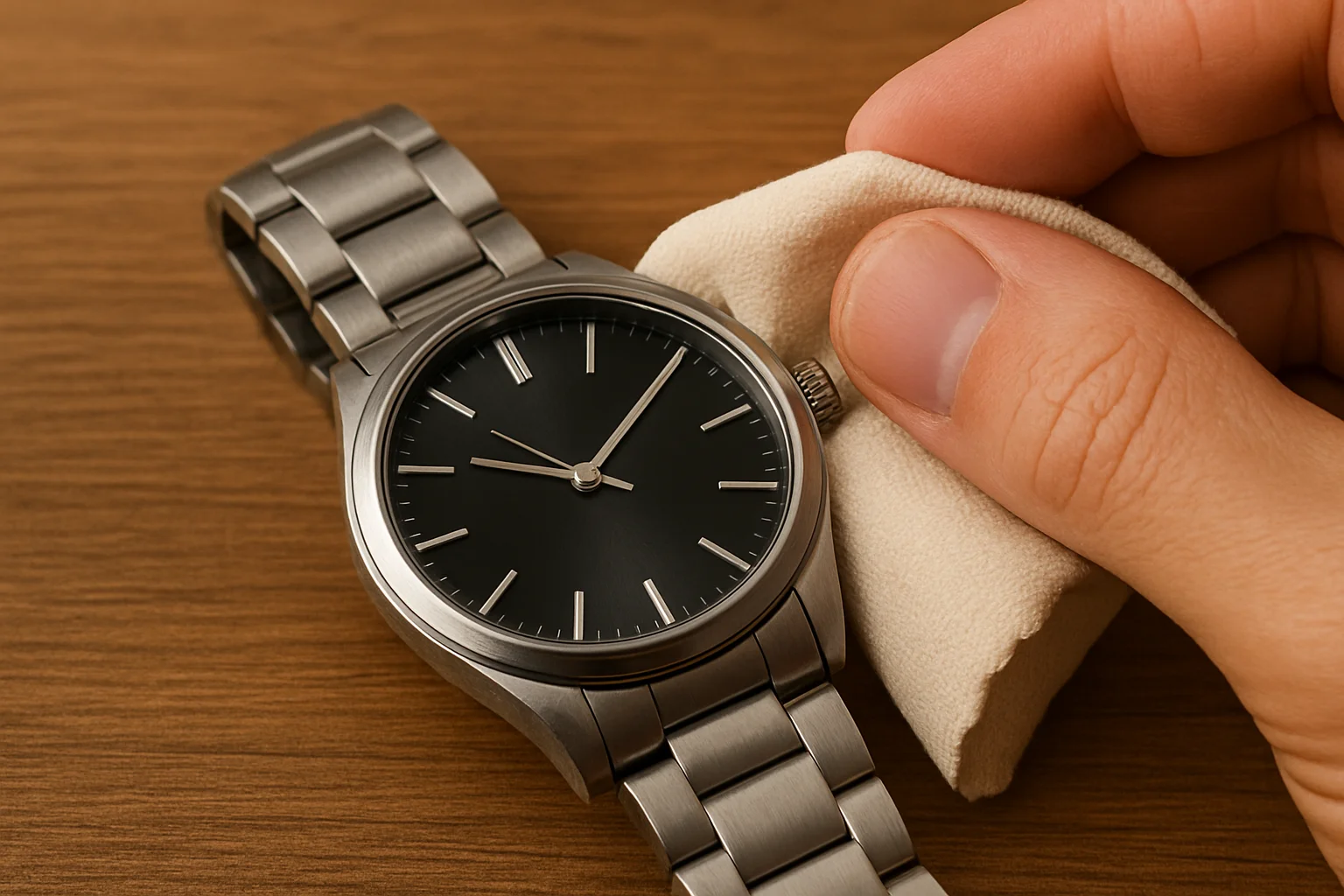
With the strap off, you can see the dust and grit that collect where strap meets case, and cleaning now is a smart step when you learn how to replace a watch strap. Use a dry cloth first, then a barely damp cloth for stubborn marks, and dry fully before fitting. Avoid harsh cleaners on plated cases or watches with unconfirmed water resistance.
- DO: Wipe lugs, case edge, and bar holes.
- DO: Check for bent lugs or worn holes.
- DO: Dry completely before fitting leather.
- DON’T: Soak the watch or use a metal pick on the case.
- DON’T: Force a bent spring bar back into shape and reuse it.
- DON’T: Do not fit over dirt; grit marks case and strap.
Seeing whether new bars seat properly is easier on a clean case when you learn how to replace a watch strap. If you notice damage, a loose lug, or an enlarged hole, pause and get advice.
Fit the New Strap
Credit: handdn.com
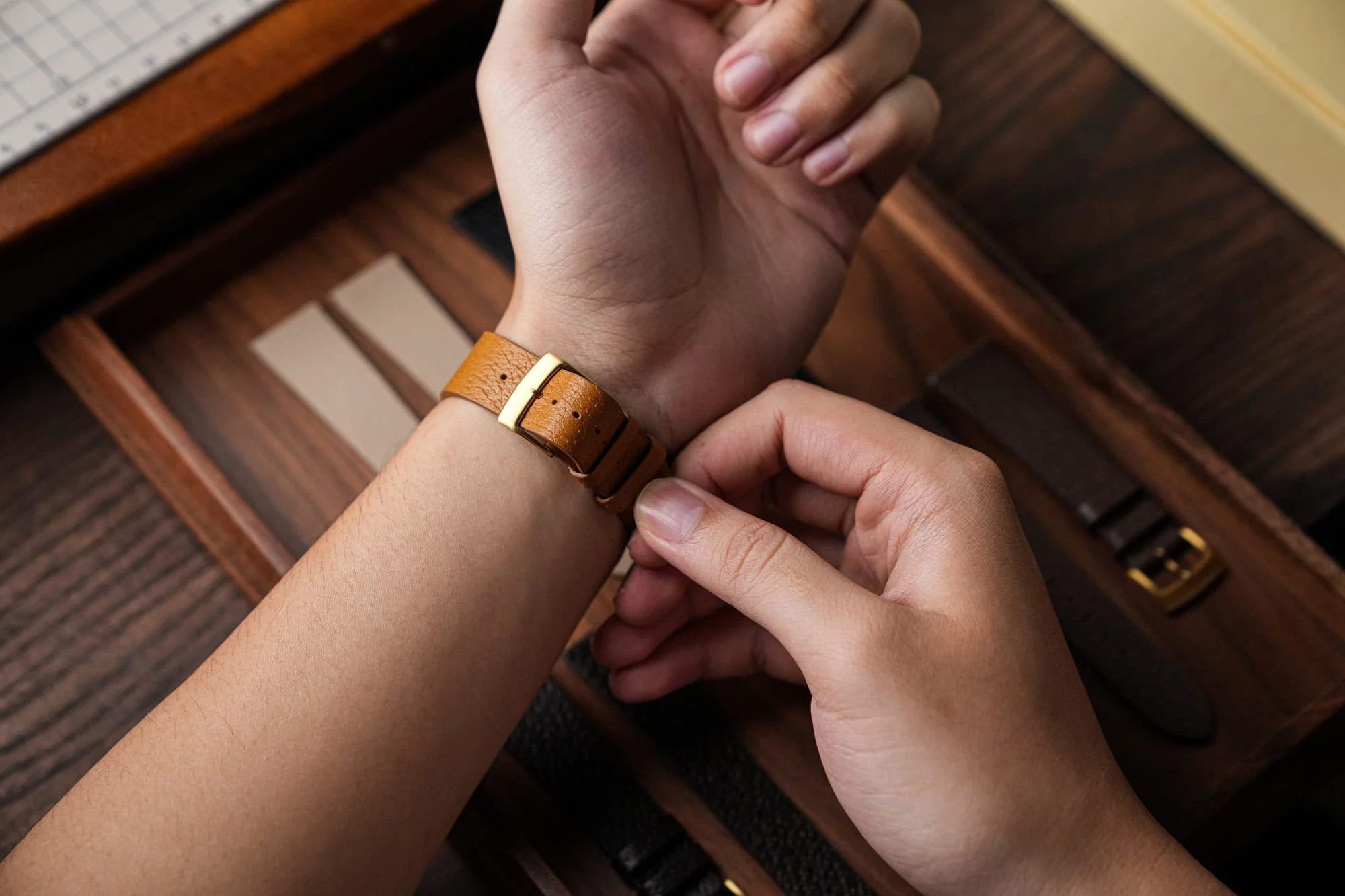
Fitting the new strap is satisfying once sizing is right, and when you learn how to replace a watch strap, remember the short buckle piece goes at 12 o’clock and the longer, holed piece at 6 o’clock. Slide the spring bar into the end of the new strap first, then seat one end of the bar in one lug hole. Use the fork tool to compress the other end, guide the strap into place, and release the bar so it snaps into the opposite hole.
Before: The new strap sits beside the case, its spring bars loose, and the watch looks unfinished. After: Both bar ends are seated, the strap sits straight between the lugs, and the watch looks intentional again, with no gap or twist.
Repeat at the other end, and check the strap is not upside down. Knowing how to replace a watch strap also means re-seating an uneven bar, rather than wearing a half-attached strap.
Secure and Test the Spring Bars
Credit: everestbands.com
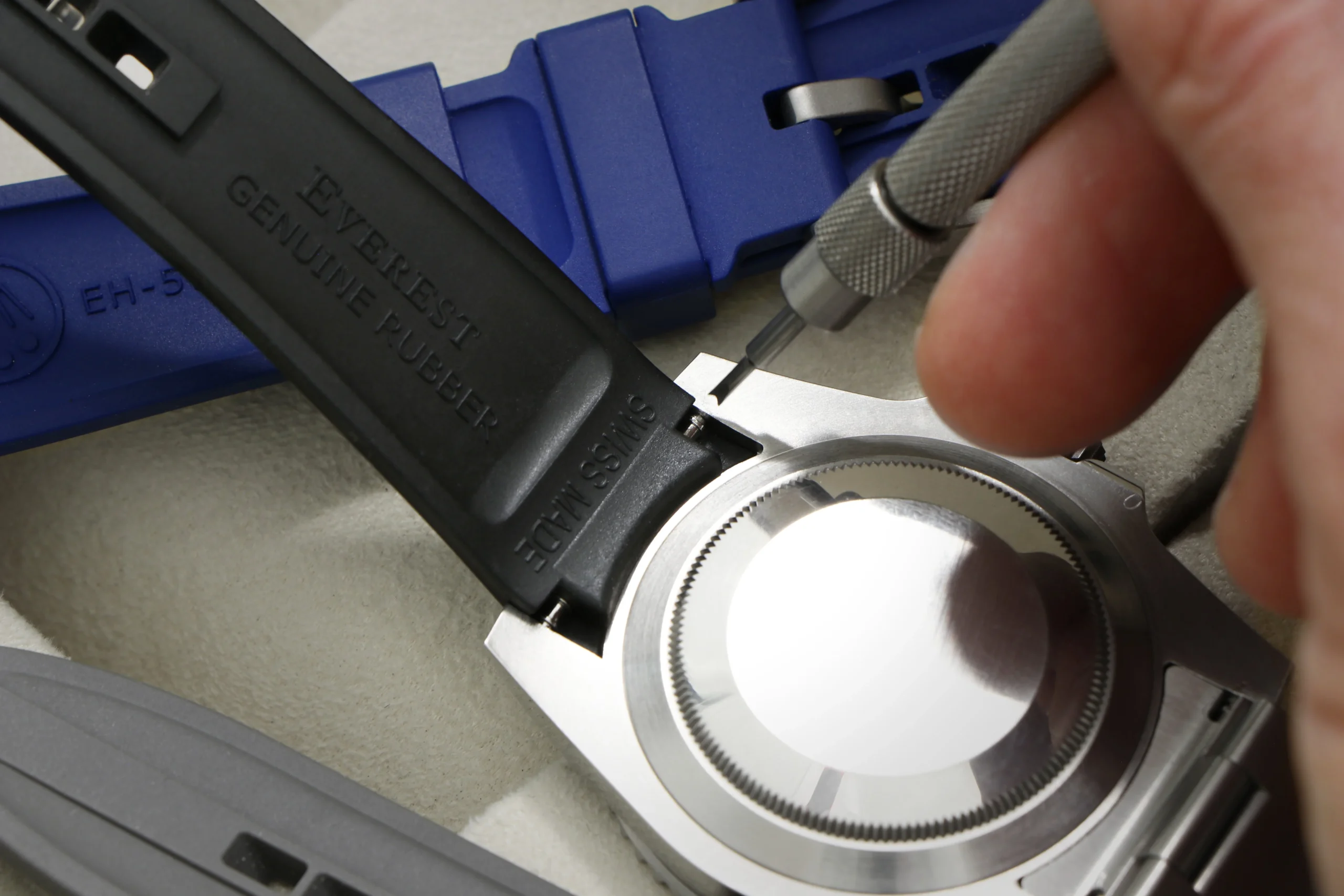
A strap that looks fitted is not necessarily fitted, so testing matters most when you learn how to replace a watch strap. Look closely at each lug: both ends of each spring bar should be visible in their holes, the strap should sit evenly, and neither bar should be tilted or partly compressed. Then tug each strap piece firmly, first outward and then sideways, as if you were checking a seat belt before a drive.
Budget note: You do not need an expensive tester: your eyes, fingers, and a firm tug are enough for most watches, and spare bars cost far less than a dropped watch. Replace any weak, bent, or rough bar, and keep spares in a labeled envelope.
If a bar will not seat, remove the strap and try again, checking bar length matches lug width. Learning how to replace a watch strap safely means treating a failed tug test as useful information, not a reason to hope it holds. Wear it around the house first.
Adjust the Fit and Comfort
Credit: faire.fr
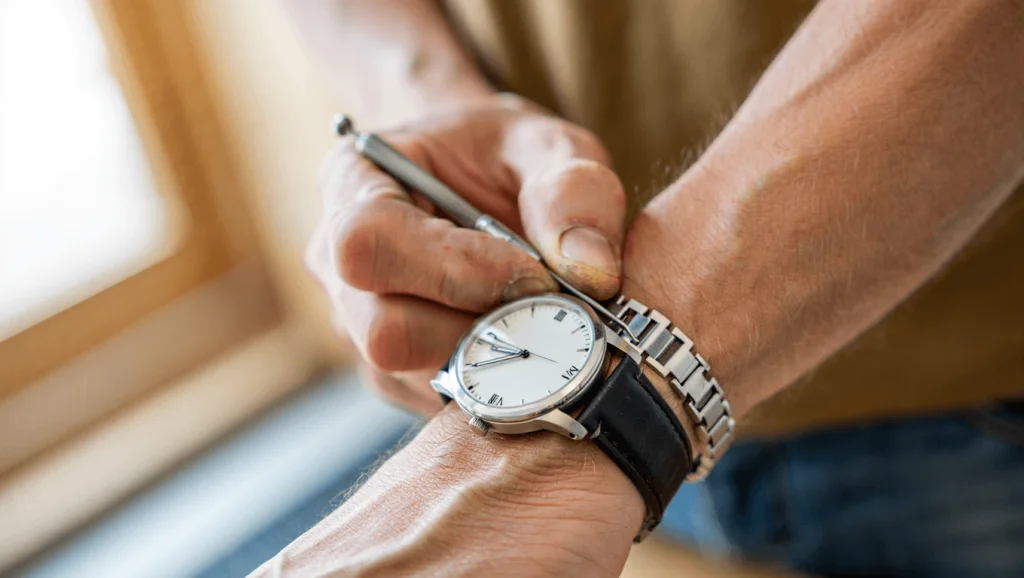
A new strap should let you slide one finger under the band, with the buckle near the center of your wrist underside, and this comfort check matters when you learn how to replace a watch strap. Leather softens slightly with wear, while rubber and nylon change less, so judge leather a touch snug, never tight enough to leave a deep mark. Move the buckle one hole at a time, and wear it for an hour before judging.
Check the full watches collection for a second strap style for weekends or formal days, because one watch feels very different on leather, rubber, or nylon. If the strap pulls the watch head to one side, the fit, not the watch, needs adjusting.
Trust how the strap feels after a normal morning, not just in the first minute. When you know how to replace a watch strap, judge fit calmly: if it creases at the lugs, pinches, or slides over your wrist bone, adjust the hole or try another length.
Care for the Strap and Know When to Seek a Watchmaker

Credit: melmuco.com
Good care starts with simple habits, and when you learn how to replace a watch strap, you also learn to wipe leather after wear, rinse rubber after swimming or sweating, and avoid prolonged sun, heat, and harsh chemicals. Leather worn daily usually needs replacing every one to two years, while rubber and metal last longer if cleaned regularly. Replace any cracked, frayed, or loose strap promptly, rather than wearing it until it fails.
- Inspect strap and bars monthly for wear, cracks, and bending.
- Clean as the maker directs; let leather dry naturally, away from radiators.
- Store spare straps flat and dry, with bars kept separately and labeled.
- Book a watchmaker for a valuable watch, screwed bracelet, damaged lug, or fitting that resists normal pressure.
When you know how to replace a watch strap yourself, you also know its limits, and that judgment protects watch and wrist. A professional can check water resistance, fit a screwed bracelet, and repair a lug a home tool should never force.
Conclusion
From gathering a spring bar tool to testing the final tug, learning how to replace a watch strap rewards patience more than strength, and each step builds confidence for the next change. The quickest swaps use quick-release bars and take only a few minutes, while a standard spring bar strap, a careful clean, and a fit check take a little longer and still stay within a beginner’s reach. Every step can be adjusted to your watch size, strap material, budget, and routine.
Learning how to replace a watch strap gives you a practical skill you will use again and again, whether you are refreshing a daily watch or changing a strap for a special occasion. Save the steps that felt trickiest, keep your tool and spares together, and take a photo of the lug width and spring bar size for your next order. Then enjoy a watch that looks and feels new again, without a trip to the shop.
Frequently Asked Questions
What tools do I need to change a watch strap?
You need a spring bar tool, a soft cloth, and the correct replacement strap, with spare spring bars as a sensible backup. When you learn how to replace a watch strap, a dedicated fork tool gives you far more control than a pin or knife, and far less risk of scratching the case. A small screwdriver can help in a pinch.
How do I remove the old watch strap safely?
Place the watch face down on a soft cloth, slide the fork tool between the strap and the lug, and press the spring bar gently inward until it releases from the lug hole. Learning how to replace a watch strap safely means lifting the strap away without levering against the case, then working over a tray so a loose bar cannot disappear.
Can I change a watch strap without professional help?
Yes, most standard spring bar and quick-release straps can be changed at home with the right tool and careful handling. If you are learning how to replace a watch strap, follow a reputable guide, work slowly, and test the fit with a firm tug before wearing the watch out. For valuable or vintage watches, a watchmaker is safer.
What size watch strap do I need?
When you learn how to replace a watch strap, measure the inside distance between the lugs in millimeters, and buy a strap with that exact width at the watch end. Common sizes include 18 mm, 20 mm, and 22 mm, but odd sizes such as 19 mm and 21 mm exist, so check the old strap, the manual, or the maker’s specifications rather than guessing from case diameter.
How do I ensure the new strap is securely attached?
Check that both ends of each spring bar are seated in their lug holes, that the strap sits straight, and that neither bar is tilted or partly compressed. When you know how to replace a watch strap, you also tug each piece firmly outward and sideways, and wear the watch around the house first. If anything moves, re-seat the bar.
How often should a watch strap be replaced?
Leather straps worn daily often need replacing every one to two years, while rubber, nylon, and metal straps usually last longer with regular cleaning. Replace any strap sooner if it cracks, frays, stretches, smells despite cleaning, or has a bent spring bar or loose buckle, because those are signs it may fail.
When should I take my watch to a watchmaker instead?
Take it to a watchmaker if the watch is valuable or vintage, the bracelet uses screws, a lug or lug hole is damaged, or a fitting resists normal pressure. If you are learning how to replace a watch strap, this is the right limit to respect: a professional can check water resistance, repair a lug, and use specialist tools safely.


