
Why Grand Seiko Beats Rolex (In Ways Rolex Can’t Compete)

Grand Seiko vs Rolex is not really a fight about which watch tells the time. Both tell it beautifully, both are built to last, and both will earn respect from anyone who knows watches. The difference is what you notice first. A Rolex announces itself from across the room. A Grand Seiko waits until you lean in, turn it in the light, and see a mirror-polished edge, a dial like fresh snow, and a seconds hand that glides instead of ticking. The 9 reasons below cover polishing, dials, movements, value, availability, and quiet luxury, so you can decide which kind of excellence you actually want on your wrist.
Each reason below gives you a concrete detail, one practical way to judge it, and honest advice about the trade-off. Rolex still wins on resale value and instant recognition, and this guide does not pretend otherwise. But if you buy a watch to wear and enjoy, rather than to impress a room or protect an investment, Grand Seiko vs Rolex starts to tilt in a surprising direction. Pick the reasons that matter most to you, try both brands on, and let your eyes decide.
Zaratsu Mirror Polishing
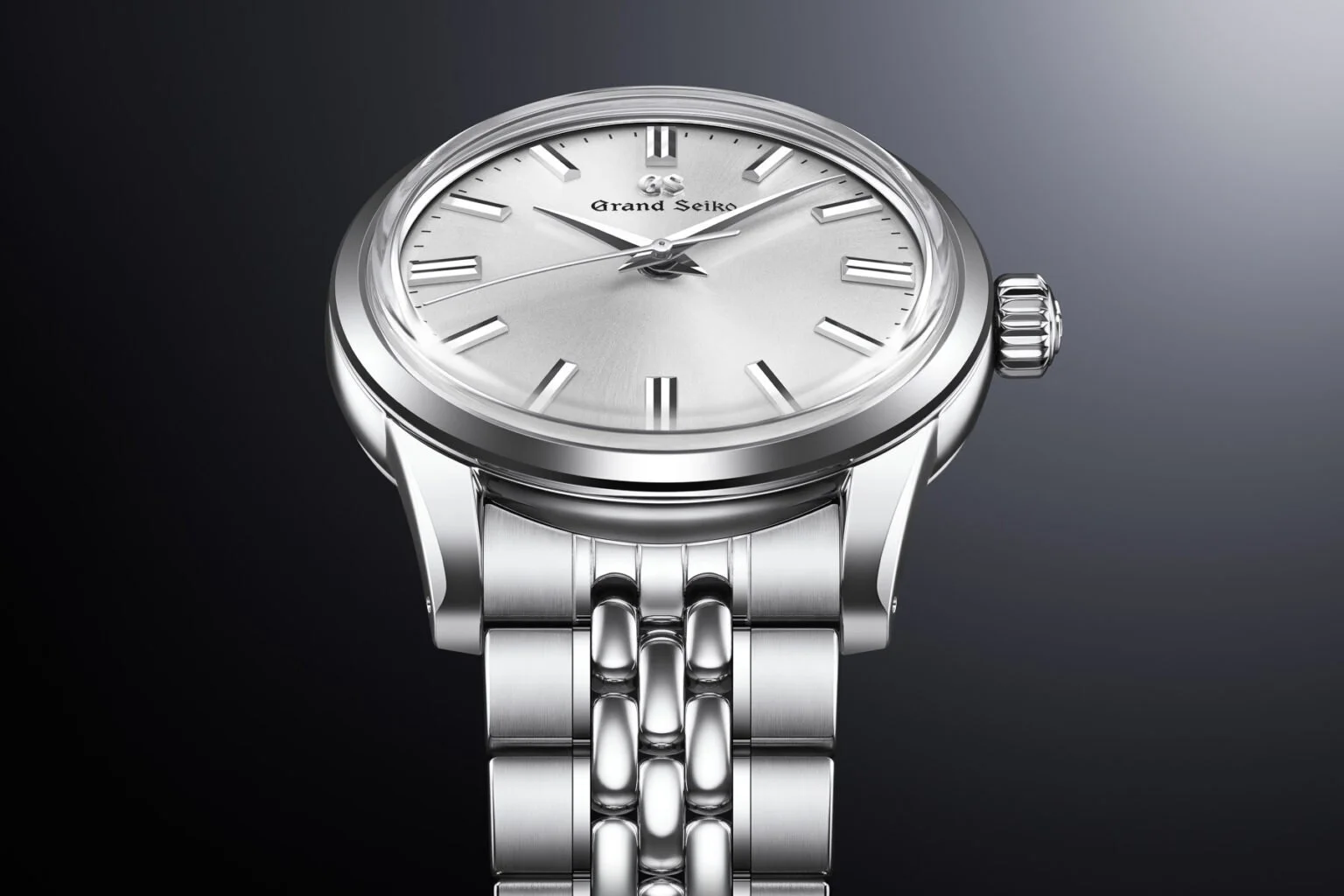
Grand Seiko’s Zaratsu polishing is the first thing that stops collectors in their tracks. A trained polisher presses the case against a spinning tin plate by hand, creating flat, distortion-free mirror surfaces that sit beside soft brushed areas with a razor-sharp edge. Rolex finishing is excellent and very consistent, but it is largely machine-led, and it does not chase that same hand-polished mirror at the same price. In a Grand Seiko vs Rolex comparison, hold both under a single shop light and watch the reflections.
- Look at the case edge, not the dial, first.
- Move the watch slowly and check for wavy reflections.
- Compare the polished flank with the brushed top.
- Repeat in daylight, where poor polishing shows fastest.
That contrast is the whole point: Grand Seiko vs Rolex is often decided by finishing you feel in your hand. Zaratsu surfaces scratch more easily than brushed steel, so wear it with care and keep the original finish in mind before any polish.
Nature-Inspired Dials
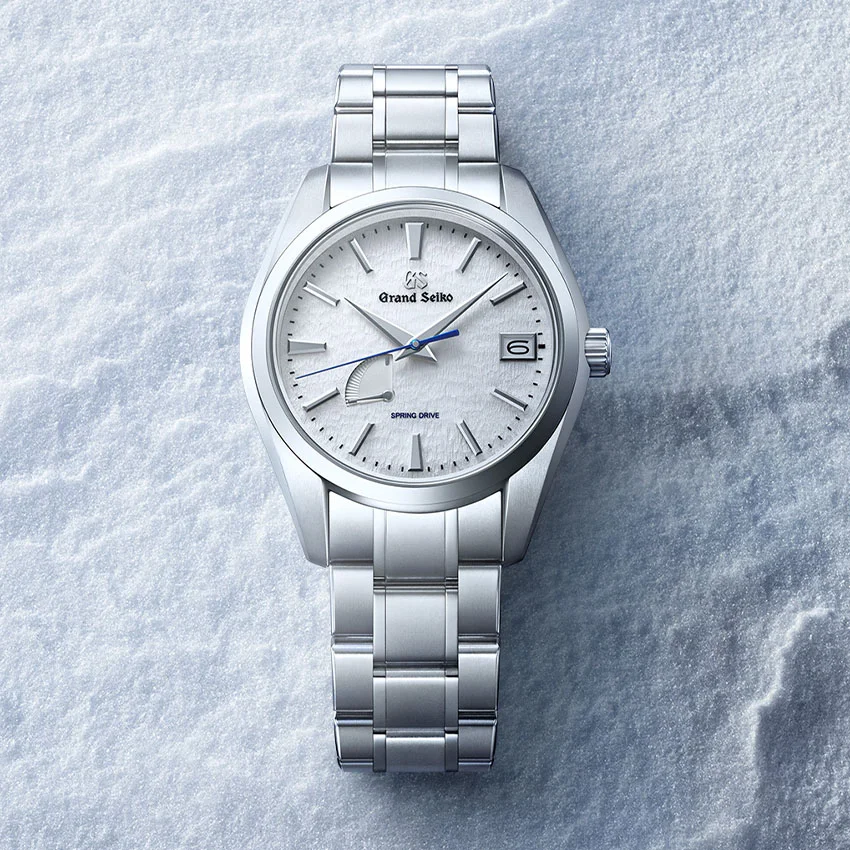
Grand Seiko dials are inspired by the Japanese landscape, and that is not just marketing poetry. The Snowflake dial captures snow drifting over the Shinshu mountains, the White Birch dial copies birch bark, and other textures echo cherry blossom, streams, and frost. Rolex dials are clean, legible, and instantly readable, but they rarely try to tell a story. When you compare Grand Seiko vs Rolex dials side by side, the Grand Seiko rewards a second, slower look.
- Start with the Snowflake SBGA211 if you want the classic example.
- Try the White Birch SLGH005 for a bolder, wood-grain texture.
- Check the dial in sunlight, shade, and lamplight before deciding.
- Match the dial tone to your usual shirts, not just to a photo.
A textured dial can be harder to read quickly than a plain Rolex dial, so try it in a hurry as well as at leisure. In Grand Seiko vs Rolex terms, this is art you wear daily, not art you keep in a safe.
Spring Drive Accuracy
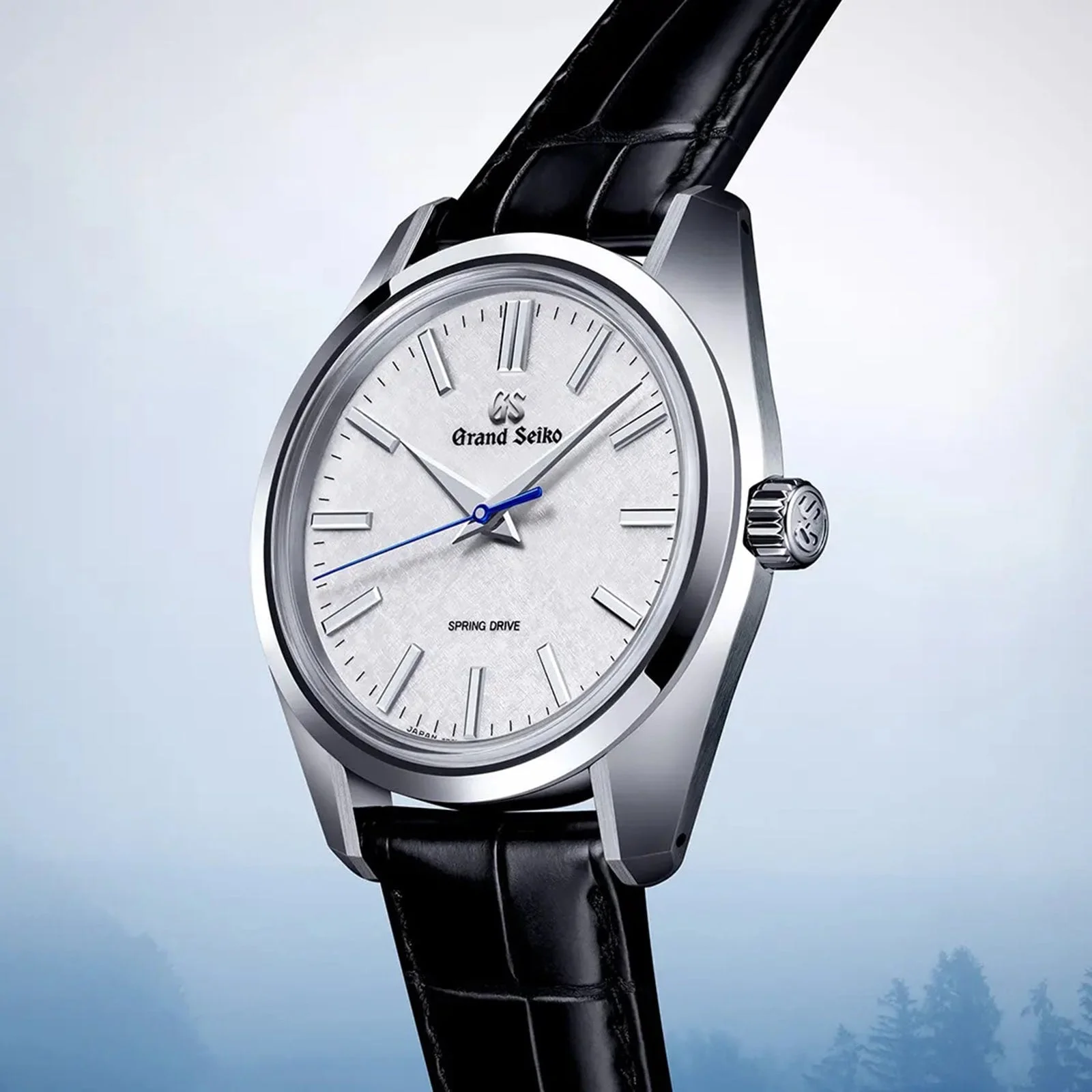
Spring Drive is the movement Rolex simply does not make. A mainspring drives the watch, just like a mechanical movement, but a quartz oscillator and electromagnetic brake regulate it, so the seconds hand glides smoothly around the dial with no tick at all. Standard Spring Drive is rated at about plus or minus 15 seconds per month, roughly one second per day, while Rolex’s Superlative Chronometer standard is plus or minus two seconds per day. For pure accuracy, Grand Seiko vs Rolex is not close.
Quick Tip: Watch the seconds hand for a full minute before you buy. A Spring Drive hand should sweep continuously, with no stepping or stutter, and that glide is the easiest way to tell the technology apart from any ordinary automatic.
Spring Drive still needs servicing, and Grand Seiko service intervals are shorter than Rolex’s long intervals, so budget for that. But if you hate resetting your watch, Grand Seiko vs Rolex accuracy alone may settle the argument for you.
Hi-Beat Mechanical Stability
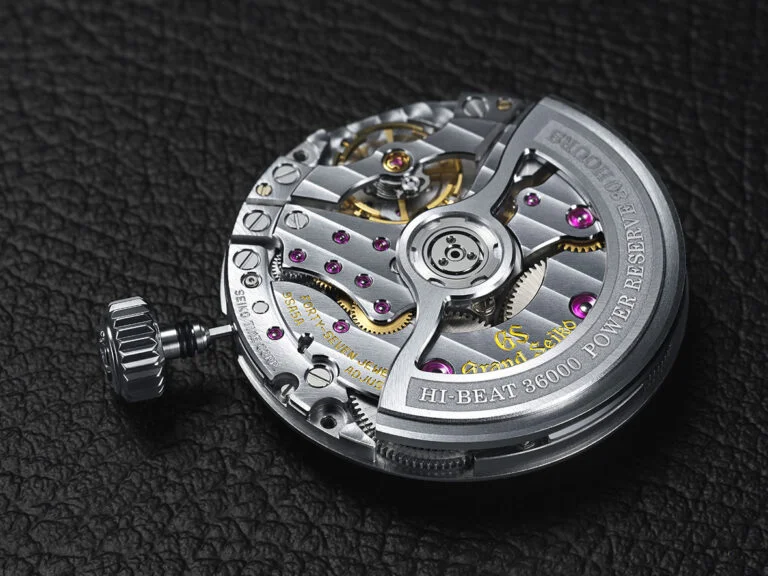
If you prefer a purely mechanical watch, Grand Seiko’s Hi-Beat movements still give Rolex a serious fight. Hi-Beat calibres beat at 36,000 vibrations per hour, twice the rate of many standard movements, which helps stability and makes the seconds hand sweep more smoothly. Rolex movements are famously robust, accurate, and easy to service, and they hold up superbly in daily wear. Yet in a Grand Seiko vs Rolex mechanical comparison, Hi-Beat offers a higher-frequency thrill that Rolex’s mainstream calibres do not chase.
DO:
- Listen for a smooth, fast beat rather than a slow tick.
- Try a Hi-Beat on your wrist for a full day.
- Ask about power reserve, typically around 55 hours on modern Hi-Beat models.
DON’T:
- Do not judge Hi-Beat only by a spec sheet.
- Do not skip the service schedule for a high-beat movement.
- Do not expect Hi-Beat to beat Spring Drive on raw accuracy.
Hi-Beat watches can feel more alive than a standard automatic, and that is a real pleasure.
More Watch for Your Money
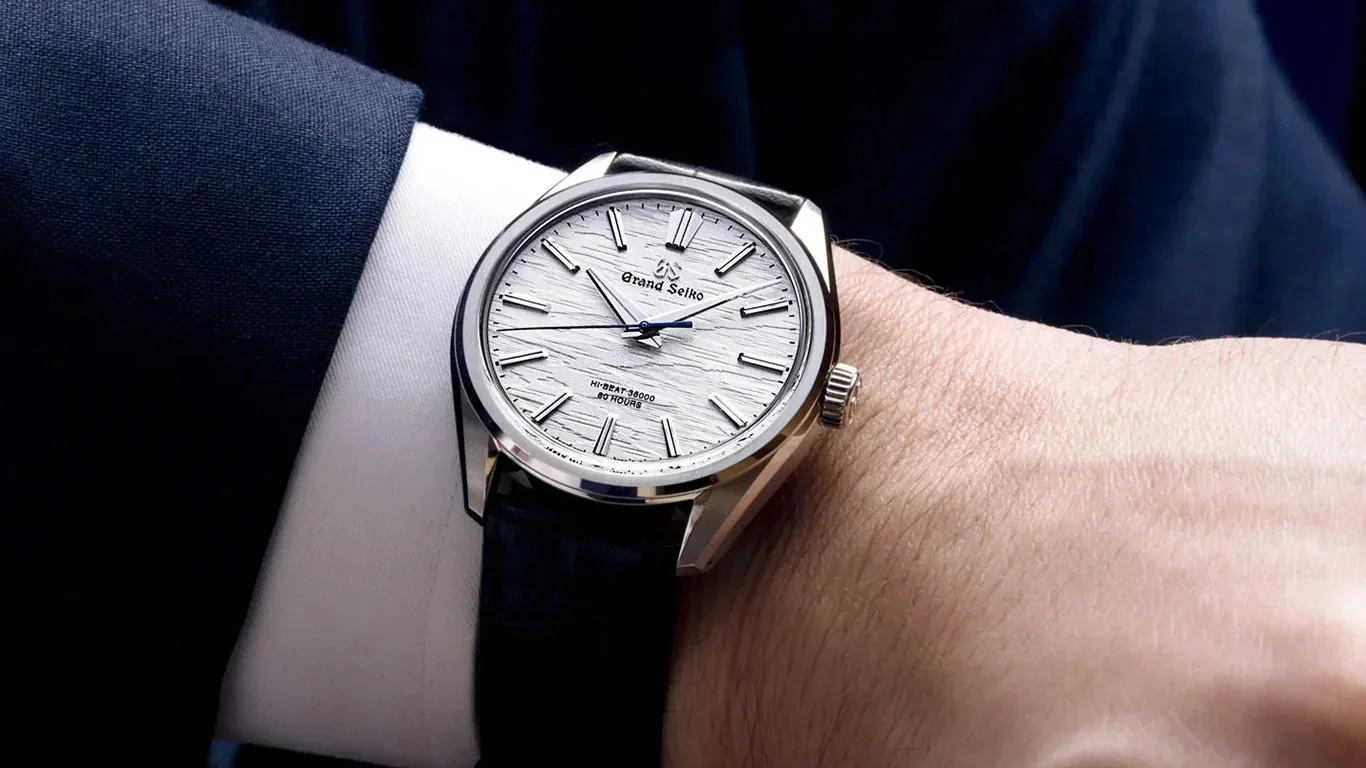
Dollar for dollar, Grand Seiko gives you more finishing, more dial craft, and more movement technology than a Rolex at a comparable retail price. Rolex prices also reflect huge global demand, marketing, and brand prestige, and many steel Rolex models trade above retail, which pushes the real cost of buying one higher. Grand Seiko prices are lower to start with, and you are paying mainly for the watch. That is why Grand Seiko vs Rolex value is such a strong argument for buyers who plan to wear, not flip.
Before: You budget for a Rolex, join a waiting list, and pay a premium just to get the reference you want.
After: You walk into a Grand Seiko boutique, try several references the same day, and spend the saving on a second strap, a service fund, or simply keep it.
Grand Seiko resale is weaker, so do not buy one expecting Rolex-style appreciation. If you buy for wearing, though, Grand Seiko vs Rolex value is hard to argue against.
You Can Actually Buy One

Availability is where Grand Seiko beats Rolex in the most practical way possible. Popular Rolex models, from the Submariner to the Daytona, often come with long authorised dealer waiting lists, and many buyers end up paying secondary-market premiums. Grand Seiko boutiques and authorised dealers, by contrast, usually have stock to try and buy, often without a list at all. In a Grand Seiko vs Rolex buying experience, one feels like a hunt and the other feels like shopping.
Budget note: Because you can buy at retail, you avoid the hidden premium that often doubles the true cost of a popular Rolex. Put that saving toward the exact dial and bracelet you want, rather than settling for whatever reference happens to be available, and check current authorised dealer pricing before you commit.
Availability does not make a watch better on its own, but it changes how you feel about owning it. Grand Seiko vs Rolex should include the day you buy the watch, not just the years you wear it.
Quiet Luxury That Rewards Close Looking
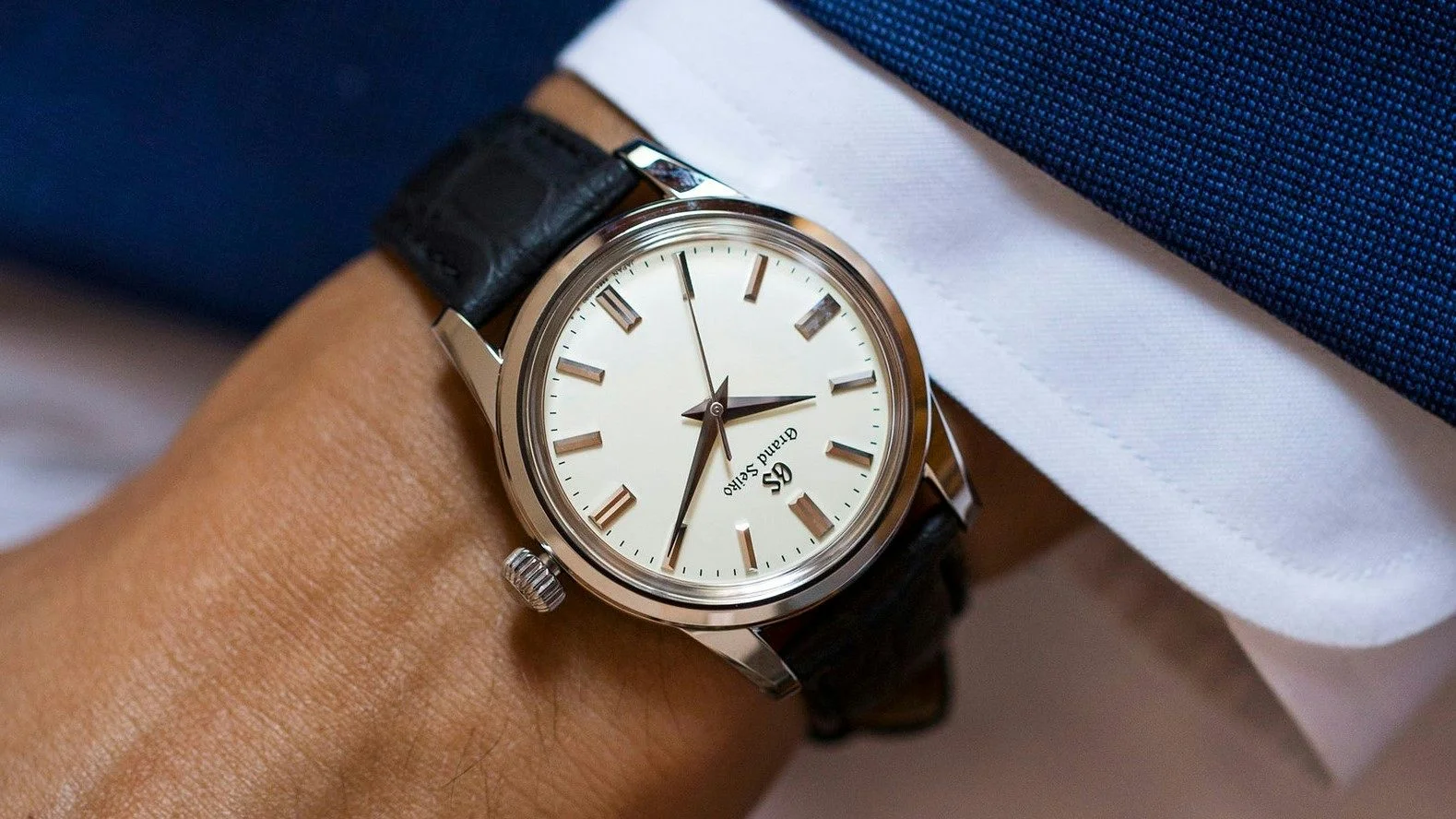
Grand Seiko is quiet luxury in the truest sense. It does not shout its name across a room, and many people will simply see a handsome steel watch, not a famous crown logo. For some buyers that is a drawback, because part of Rolex’s appeal is instant recognition. For others it is freedom: you can wear a superbly finished watch to work, to dinner, and on holiday without inviting questions, comments, or unwanted attention. Grand Seiko vs Rolex, on this point, is really about whether you want applause or privacy.
A quiet watch still needs to suit you, so wear it with your normal clothes, not just a suit in a boutique mirror. Check it against a shirt cuff, a sweater, and a jacket, and notice whether you enjoy it for yourself. If you need a watch to signal success to strangers, Rolex will do that job better. If you enjoy craft for its own sake, Grand Seiko vs Rolex leans clearly toward Grand Seiko here.
Hand-Finished Details Everywhere
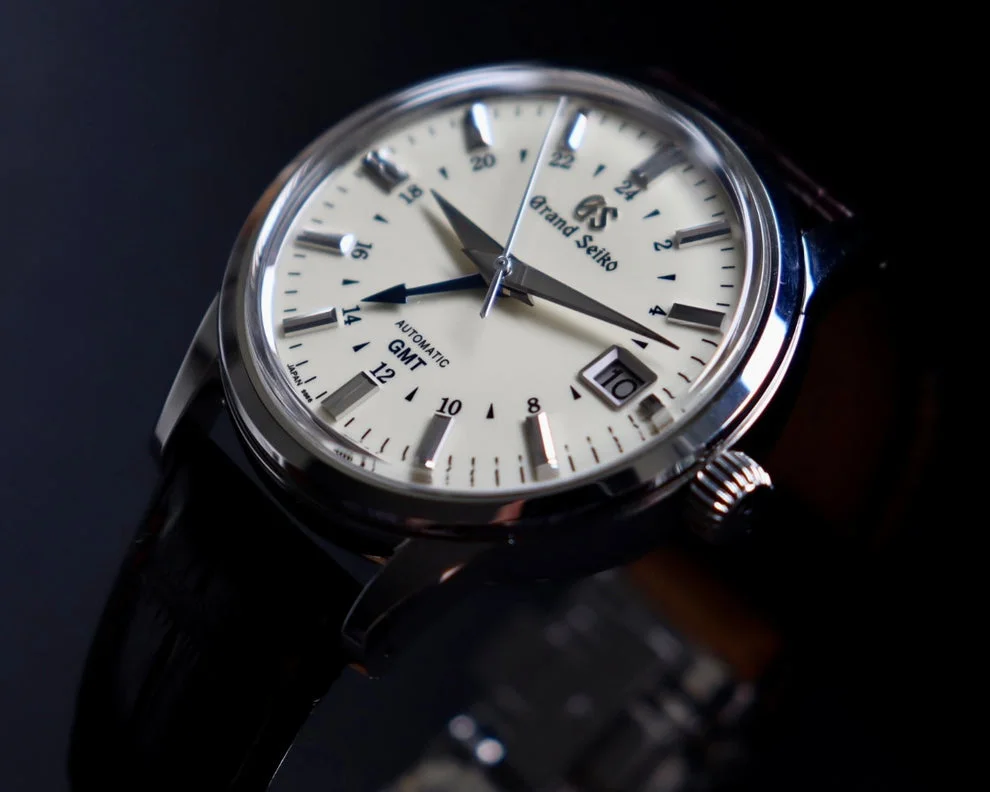
Look closer at a Grand Seiko and the hand work keeps appearing. Hands and indices are diamond-cut, faceted, and polished by hand, so they catch light from angles and stay crisp under magnification. Cases combine Zaratsu mirrors with fine brushing, dials are stamped and finished, and the lion emblem on the case back feels deliberate. Rolex details are precise, but designed for consistency at huge scale. In Grand Seiko vs Rolex craft, the difference is hand work you can see, not just quality you can assume.
- Use a loupe or your phone camera zoom on the hands and indices.
- Check the edge where polished and brushed surfaces meet.
- Look at the dial texture under a single light source.
- Compare the same detail on a Rolex, then decide which pleases you more.
Hand finishing takes time, which is partly why Grand Seiko makes far fewer watches than Rolex each year. Grand Seiko vs Rolex, at this level, is a choice between artisan detail and industrial perfection.
A Full Range of Movements, Not One Formula
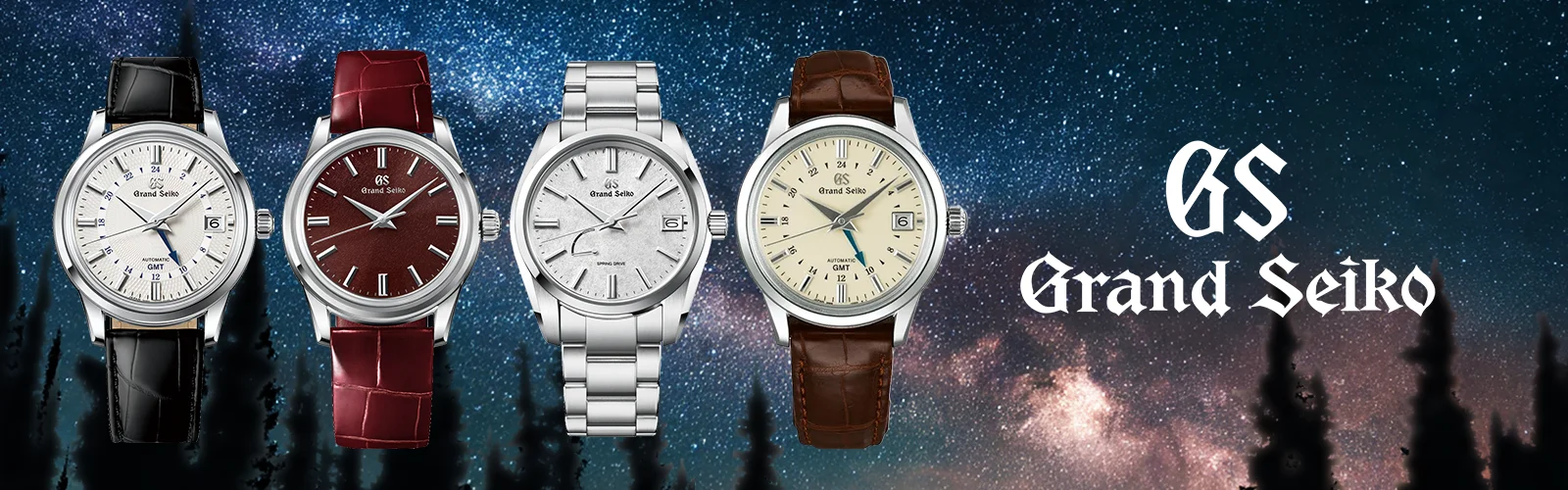
Grand Seiko offers three distinct movement families, and that range is something Rolex does not match. Spring Drive gives you mainspring power with quartz regulation and a gliding hand. Hi-Beat gives you high-frequency mechanical excitement. The 9F quartz range gives you super-accurate, beautifully finished quartz that is built to be serviced, not thrown away. Rolex focuses on excellent automatic movements, and does that superbly. But Grand Seiko vs Rolex choice is wider on the Grand Seiko side, because you can pick the technology that fits your life.
- Choose Spring Drive if accuracy and that smooth sweep matter most.
- Choose Hi-Beat if you want pure mechanical character.
- Choose 9F quartz if you want grab-and-go accuracy with real craft.
- Try all three before you decide, because the feel differs more than the specs suggest.
A wider range means more to learn, so ask a dealer to show you each movement running. Grand Seiko vs Rolex, for a curious collector, rewards that curiosity with real variety.
Conclusion
From Zaratsu mirrors to Snowflake dials, from Spring Drive glide to Hi-Beat buzz, Grand Seiko beats Rolex most clearly where craft, accuracy, and value are judged up close rather than from across a room. Rolex still wins where recognition, resale, and a vast service network matter most, and no honest guide should hide that. Every reason above can be adjusted to your wrist, your budget, and your routine, whether you want a daily diver, a dress watch, or a quiet statement piece. Grand Seiko vs Rolex is not about declaring one brand worthless; it is about noticing what each brand does best.
Save the 2-3 reasons that feel most like you, such as dial craft, Spring Drive accuracy, and the freedom of actually buying the watch you want, and take those priorities into a boutique. Try a Snowflake, a White Birch, and a Hi-Beat model on your wrist, compare them with the Rolex you had in mind, and check current pricing with an authorised dealer. For more affordable luxury context, see our guide to affordable luxury watches, and browse more styles in our watches category. Grand Seiko vs Rolex, judged by what you see and feel every day, may surprise you.
Frequently Asked Questions
Is Grand Seiko better than Rolex?
From a craftsmanship standpoint, many collectors say yes, thanks to Zaratsu polishing, nature-inspired dials, and Spring Drive. Rolex still leads on brand status, recognition, and resale value. Grand Seiko vs Rolex therefore depends on your priority: choose Grand Seiko for finishing and innovation, and Rolex for status and investment-style holding.
Which holds value better, Grand Seiko or Rolex?
Rolex holds value far better than Grand Seiko. Many steel Rolex models trade at or above retail, while most Grand Seiko models trade below retail on the secondary market. Grand Seiko vs Rolex on resale is not close, so buy Grand Seiko to wear and enjoy, not as a guaranteed store of value.
Why does Grand Seiko depreciate more than Rolex?
Grand Seiko depreciates mainly because secondary demand and global brand recognition are lower than Rolex, and supply is more available. The market does not pay the same premium for finishing as it does for the Rolex name. Grand Seiko vs Rolex demand is slowly shifting as Western collector interest grows, but the gap remains wide.
Are Grand Seiko watches hard to buy?
No, Grand Seiko watches are generally readily available at boutiques and authorised dealers, without the long waiting lists common for popular Rolex models. That availability is a major Grand Seiko vs Rolex advantage in practice, because you can try several references and buy at retail instead of paying a secondary premium.
Which is more accurate, Grand Seiko or Rolex?
Grand Seiko Spring Drive is more accurate, at about plus or minus 15 seconds per month, roughly one second per day, against Rolex’s Superlative Chronometer standard of plus or minus two seconds per day. Grand Seiko vs Rolex accuracy therefore favours Spring Drive, although both standards are excellent for daily wear.
Rolex or Grand Seiko for diving?
Rolex Submariner models are purpose-built dive watches, typically with 300 metres of water resistance and a long track record underwater. Grand Seiko divers, often rated to 200 metres, excel on finishing and Spring Drive technology. Grand Seiko vs Rolex for serious diving leans Rolex, while Grand Seiko suits diving style plus everyday dial craft.
Which Grand Seiko holds its value best?
Hi-Beat halo models hold value best, led by the White Birch SLGH005, which has traded at or above its original retail price in some reports. Limited Hi-Beat and special-dial references generally resist depreciation better than standard catalogue models. Grand Seiko vs Rolex resale still favours Rolex overall, so choose the Grand Seiko you love wearing first.


